
Smelly Fridge? How to Find the Cause, Clean It and Keep It Fresh
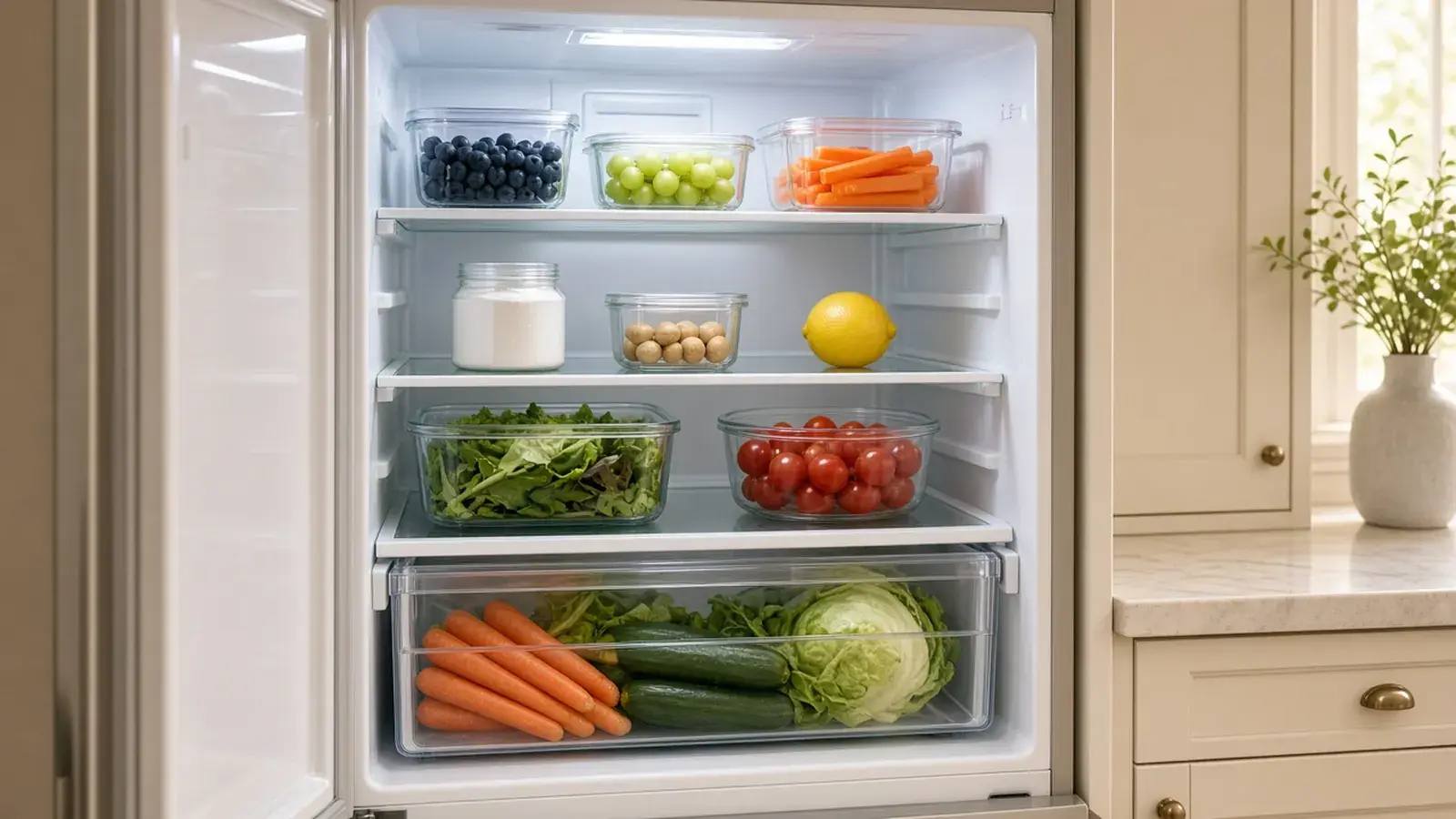
First find the source: spoiled food, spilt liquid or a blocked drain hole at the back. Then empty the fridge and wipe it out with warm water and a little washing-up liquid or vinegar, shelves and seals included, and let it dry. An open bowl of bicarbonate of soda absorbs lingering odours. After that, keep food covered and the fridge at 4–5 °C.
Where the smell comes from
A fridge never smells for no reason. Cold slows bacteria and mould down but doesn’t stop them. The most common causes:
- Spoiled food, often forgotten at the back or in the salad drawer.
- Spilt liquids such as milk, meat juices or marinade that have dried under drawers or in grooves.
- A blocked drain hole on the back wall where water and crumbs ferment.
- Strong-smelling food stored uncovered, such as cheese, onions, fish or garlic, whose smell transfers to everything else.
- Dirty door seals, where crumbs and moisture collect in the folds.
- Too high a temperature, so food spoils faster.
Step 1: Empty and sort
Allow half an hour, ideally just before your next shop when the fridge is fairly empty. Put perishables in a cool bag with ice packs.
Take everything out and check each item: anything out of date, mouldy or smelling odd goes. Pay particular attention to jars with dried residue around the lid and to the salad drawer.
Step 2: Clean thoroughly
- Switch off or unplug the fridge.
- Remove shelves, drawers and door racks and wash them in the sink with warm water and washing-up liquid. Don’t pour hot water over cold glass shelves, as they can crack. Let them reach room temperature first.
- Wipe the inside with warm water and a little washing-up liquid, or with vinegar and water (about 1 part vinegar to 4 parts water). Vinegar is mildly antibacterial and helps with smells.
- Clean grooves and corners with an old toothbrush.
- Wipe the door seal carefully, including the folds. Dark spots may be mould: treat with vinegar solution and dry well.
- Wipe over with clean water and dry everything with a clean cloth.
Step 3: Don’t forget the drain hole
On the back wall inside the fridge, there’s usually a channel with a small hole. Condensation runs through it into a tray above the compressor, where it evaporates. If the hole is blocked, water collects at the bottom of the fridge and starts to smell.
Clean the hole gently with a cotton bud or the cleaning tool many fridges come with. Then use a needle-free syringe or small funnel to pour in a little warm vinegar water. If it drains freely, the hole is clear.
Step 4: Neutralise lingering odours
Leave the fridge open for 15–30 minutes after cleaning. For a faint remaining smell, try:
- Bicarbonate of soda: a few tablespoons in an open dish on a middle shelf. Replace every 1–3 months.
- Activated charcoal: as a ready-made deodoriser for the door rack.
- Lemon: a cut lemon smells fresh, but it masks odours more than it absorbs them.
If a strong smell persists for days even though everything is clean, it may have got into the plastic. Leaving the switched-off fridge open for a few hours with a large dish of bicarb usually helps.
Step 5: Load it properly
Loading your fridge properly means fewer smells and less food waste:
- Top: cooked food, leftovers, cheese in containers.
- Middle: dairy.
- Bottom glass shelf, the coldest spot: raw meat and fish, well wrapped.
- Salad drawer: fruit and veg that don’t suffer in the cold.
- Door: drinks, butter, sauces and eggs.
Always keep strong-smelling food in well-sealed containers. Glass is ideal because it doesn’t absorb smells.
The right temperature
Many fridges are set too warm. The usual recommendation is 4–5 °C on the middle shelf, and no more than 7 °C. The freezer should be at −18 °C. A simple fridge thermometer quickly tells you whether the dial setting is right. If the freezer compartment has iced up, defrost it, since ice reduces cooling performance.
Products that actually help
Bicarbonate of soda (food grade, 1 kg)
An open dish of bicarb in the fridge absorbs odours. Replace it every 1–3 months. The old bicarb can still be used for cleaning.
Link coming soon (TODO: Amazon UK/US Associates ID)Activated charcoal fridge deodoriser
A compact odour absorber for the fridge door. Handy if you don't want an open dish on a shelf.
Link coming soon (TODO: Amazon UK/US Associates ID)Glass food storage containers with lids (10-pack)
Storing leftovers and opened food airtight is the best prevention. Glass doesn't absorb smells and is dishwasher-safe.
Link coming soon (TODO: Amazon UK/US Associates ID)Stop it happening again
- Cover everything: leftovers in containers; cut onions, cheese and cold meats sealed.
- Once a week, before shopping, check through: what's nearly out of date goes to the front, anything spoiled goes straight out.
- Wipe up spills immediately, before they dry.
- Give the fridge a quick wipe every 1–2 months and clean the drain hole at the same time.
- Keep it at 4–5 °C, no more than 7 °C. A fridge thermometer shows whether the setting is right.
- Don't overfill it: air needs to circulate, or warm spots develop.
FAQ
Why does my fridge smell when nothing has gone off?
Often the drain hole at the back is blocked. Water and food particles collect there and start to ferment. The door seal, shelf grooves and the salad drawer are other typical sources.
How do I clean the fridge drain hole?
The small hole is usually low on the back wall, often with a channel above it. Clean it gently with a cotton bud or the cleaning tool supplied with many fridges, then use a syringe or small funnel to pour in a little warm water with a dash of vinegar. Don't use sharp objects.
Does coffee absorb fridge smells?
Dry ground coffee can absorb some odours, but partly just masks them with coffee smell. Bicarbonate of soda and activated charcoal are more neutral. Removing the cause matters more than any remedy.
How long should I leave the fridge open to air?
After cleaning, 15–30 minutes with the door open is usually enough for everything to dry. For very stubborn smells, leave the switched-off fridge open for a few hours and keep the food in a cool bag meanwhile.
Related problems
How to Descale a Kettle: 3 Methods That Actually Work
White crust and flakes in your tea? How to descale a kettle with citric acid, vinegar or a descaler, plus the mistakes to avoid.
Dehumidifier or Hygrometer: What Actually Helps Against a Damp Home?
Damp walls, wet windows, musty smell? How to measure humidity properly and tell when you really need a dehumidifier.
How to Ventilate and Heat in Winter to Prevent Mould
Short bursts of airing instead of tilted windows, the right temperature for each room and a simple daily routine to keep your home dry and warm.