
Dry Air from Central Heating: What Actually Helps (and What Doesn't)
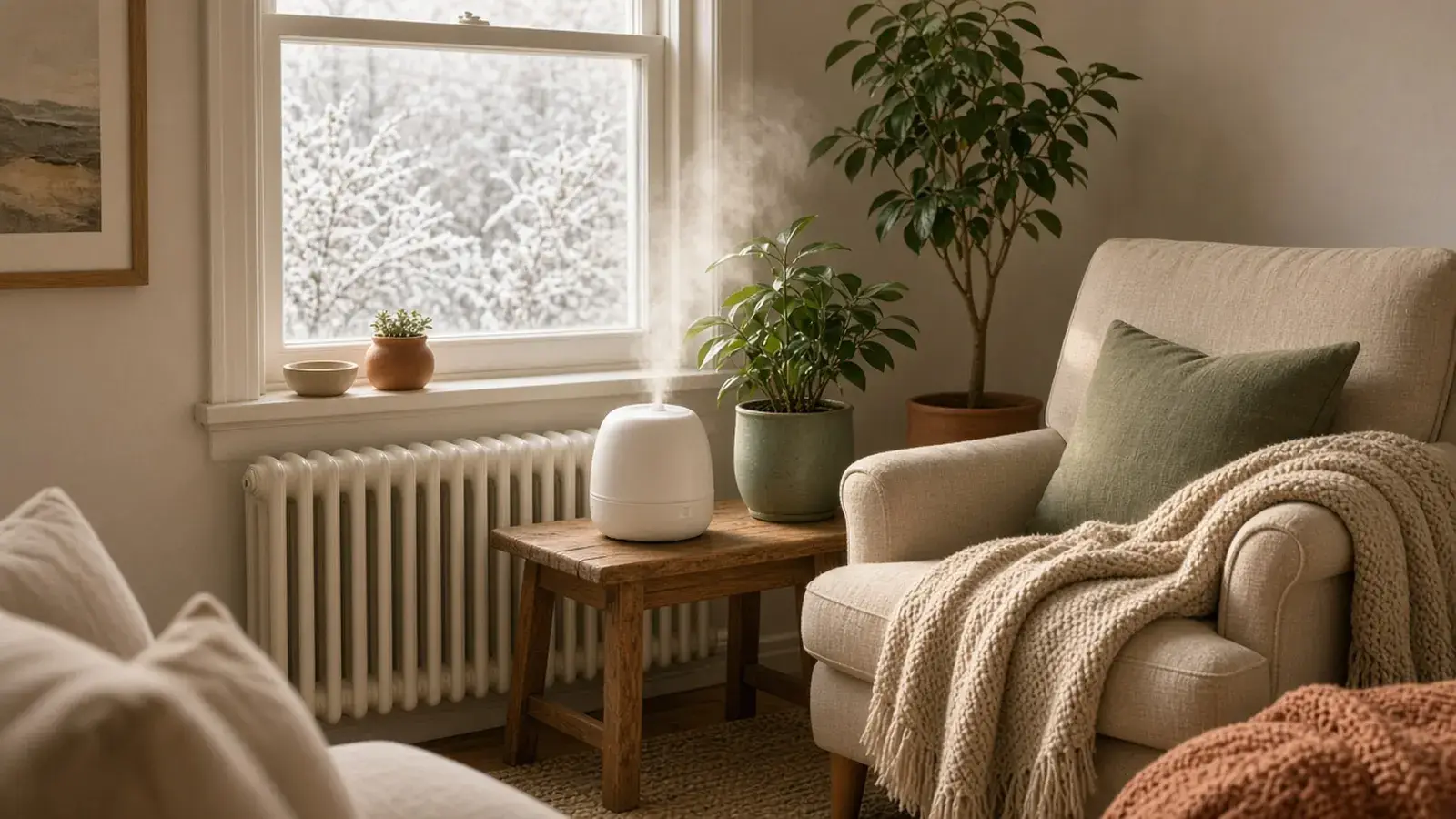
Measure first: a hygrometer tells you whether the air really is too dry. 40–60 % is ideal, and 40–50 % is plenty in winter. If it stays below about 35 %, air rooms in short bursts instead of leaving windows tilted, don't overheat (around 20 °C) and, if needed, use a humidifier, ideally an evaporative one. Water trays on radiators do very little.
Why the air gets so dry in winter
Heated air isn’t “dry” in itself. The culprit is cold outdoor air. In frosty weather, air can barely hold any water. When it comes in through a window and is warmed to 21 °C, its relative humidity plummets. Outdoor air at 80 % humidity can end up at just 20–30 % indoors once it’s warmed.
The warmer you heat your home and the more cold air keeps flowing in, for example through a permanently tilted window, the drier it gets. That’s why draughty, well-heated older flats often suffer more than modern, airtight homes.
Typical signs: a scratchy throat in the morning, dry or burning eyes, chapped lips, dry skin, static shocks from door handles and plants with brown leaf tips. Wooden floors and furniture can also develop small gaps and cracks.
Step 1: Measure, don’t guess
Air that feels dry isn’t always dry. A scratchy throat can also come from a cold or dust. So start with a hygrometer: not next to the radiator or window, but at chest height in the middle of the room. Watch the readings for a few days, morning and evening.
- Below 35 %: too dry, worth tackling.
- 35–40 %: borderline. Changing habits is often enough.
- 40–60 %: fine. No device needed.
- Above 60 %: rather too humid. Ventilate more instead. See our article on condensation on windows.
Step 2: Adjust ventilation and heating
Try these before buying a humidifier. They cost nothing and often solve the problem:
- Don’t leave windows tilted. In winter, open them wide 3–4 times a day for 5 minutes. You get fresh air without a constant stream of very dry cold air.
- Turn the thermostat down. Every degree lower raises relative humidity a little and saves on heating bills too. 20 °C in the living room and 17–18 °C in the bedroom suit most people.
- Use moisture sources: if the rest of the home is very dry, leave the bathroom door open for a moment after showering rather than airing straight outside. Cook without a lid now and then. Only do this while the hygrometer reads low.
- Add plants. Larger plants such as umbrella papyrus or snake plants release moisture and look good too.
Step 3: Choosing a humidifier
If humidity still stays below 35 %, a device can make sense. There are three types:
Evaporative humidifiers draw in room air and blow it through a wet wick. The air only takes up as much water as it can hold, so the risk of over-humidifying is low and there’s no mist carrying minerals or germs. Downsides: they’re a bit louder and the wick needs regular cleaning or replacing.
Ultrasonic humidifiers turn water into a fine, cool mist. They’re very quiet and economical. But whatever is in the water ends up in the air: limescale settles as white dust on furniture, and germs from a dirty tank can be inhaled. Fresh water every day is a must, and distilled water is best if your tap water is hard.
Steam humidifiers boil water and release germ-free steam. They’re hygienic but use much more electricity, and the hot steam is a scald risk in homes with small children or pets.
For most homes an evaporative humidifier is the least fuss. If you want something very quiet for the bedroom and will keep up with cleaning, an ultrasonic model works well.
Using a humidifier properly
- Pick the right size: check the manufacturer’s room-size rating. A small unit in a large open-plan space won’t do much.
- Use the humidistat: many units switch off at a set level. Set it to 45–50 %, not higher.
- Keep your distance: don’t place it right next to walls, curtains or wooden furniture, where moisture can collect.
- Fresh water daily: tip out what’s left, rinse the tank, refill. Standing water is the main cause of germs.
- Clean and descale weekly as described in the manual, usually with diluted citric acid or vinegar.
- Keep ventilating: a humidifier doesn’t replace fresh air.
When to be careful
In poorly insulated older homes with cold external walls, even 55 % humidity can cause condensation in corners and behind wardrobes. After a few weeks of humidifying, check window frames, room corners and the backs of furniture against external walls. If you see damp or dark patches, lower the target level.
Read next
Products that actually help
Digital indoor thermo-hygrometer
Measure before you buy anything. It shows temperature and humidity, so you can check whether airing or humidifying is working.
Link coming soon (TODO: Amazon UK/US Associates ID)Evaporative humidifier
No mist: a fan blows air through a wet wick. Generally considered more hygienic, leaves no white mineral dust and can hardly over-humidify a room.
Link coming soon (TODO: Amazon UK/US Associates ID)Quiet ultrasonic humidifier (top-fill)
Quiet and fast, good for bedrooms. But it needs discipline: change the water daily, clean the tank regularly and use distilled water if your tap water is hard.
Link coming soon (TODO: Amazon UK/US Associates ID)Stop it happening again
- Air rooms in short bursts, don't leave windows tilted: opening windows wide for a few minutes swaps the air without chilling the walls. Permanently tilted windows dry a home out badly in winter.
- Don't overheat: around 20 °C in living areas, 16–18 °C in bedrooms. The warmer the air, the lower the relative humidity.
- Put a hygrometer in each key room and watch the readings for a few days before buying a device.
- Drying the odd load of laundry indoors can help, but only if the hygrometer reads below 40 % and you ventilate afterwards.
- Drink plenty and look after your mucous membranes. For a scratchy throat, that often helps more than any gadget.
- At the end of the season, clean and dry the humidifier thoroughly before storing it.
FAQ
When is indoor air too dry?
Below roughly 30–35 % relative humidity, many people find the air uncomfortably dry. Between 40 and 60 % feels pleasant to most, and the lower end of that range is perfectly fine in winter.
Do water trays on radiators help?
Hardly. A ceramic tray evaporates only a few hundred millilitres a day, depending on the radiator. A room needs much more for a noticeable effect, and the water has to be changed regularly or it gets grubby.
Evaporative or ultrasonic humidifier?
Evaporative models are considered more hygienic and can hardly over-humidify, but they're a little louder and the wick needs regular cleaning or replacing. Ultrasonic models are quiet and cheap to run, but they spread limescale and germs from the tank if not kept clean.
Do houseplants make the air more humid?
A little. Plants release much of the water you give them. A few large plants can nudge a room's humidity up slightly, but they won't replace a humidifier in very dry air.
Related problems
Dehumidifier or Hygrometer: What Actually Helps Against a Damp Home?
Damp walls, wet windows, musty smell? How to measure humidity properly and tell when you really need a dehumidifier.
How to Ventilate and Heat in Winter to Prevent Mould
Short bursts of airing instead of tilted windows, the right temperature for each room and a simple daily routine to keep your home dry and warm.
Cold Feet, Cold Home: Stay Warm and Save on Heating
Heated throw, hot water bottle, draught excluder & co.: how to get warm at home without turning the heating right up. With safety tips.