
Cold Feet, Cold Home: Stay Warm and Save on Heating
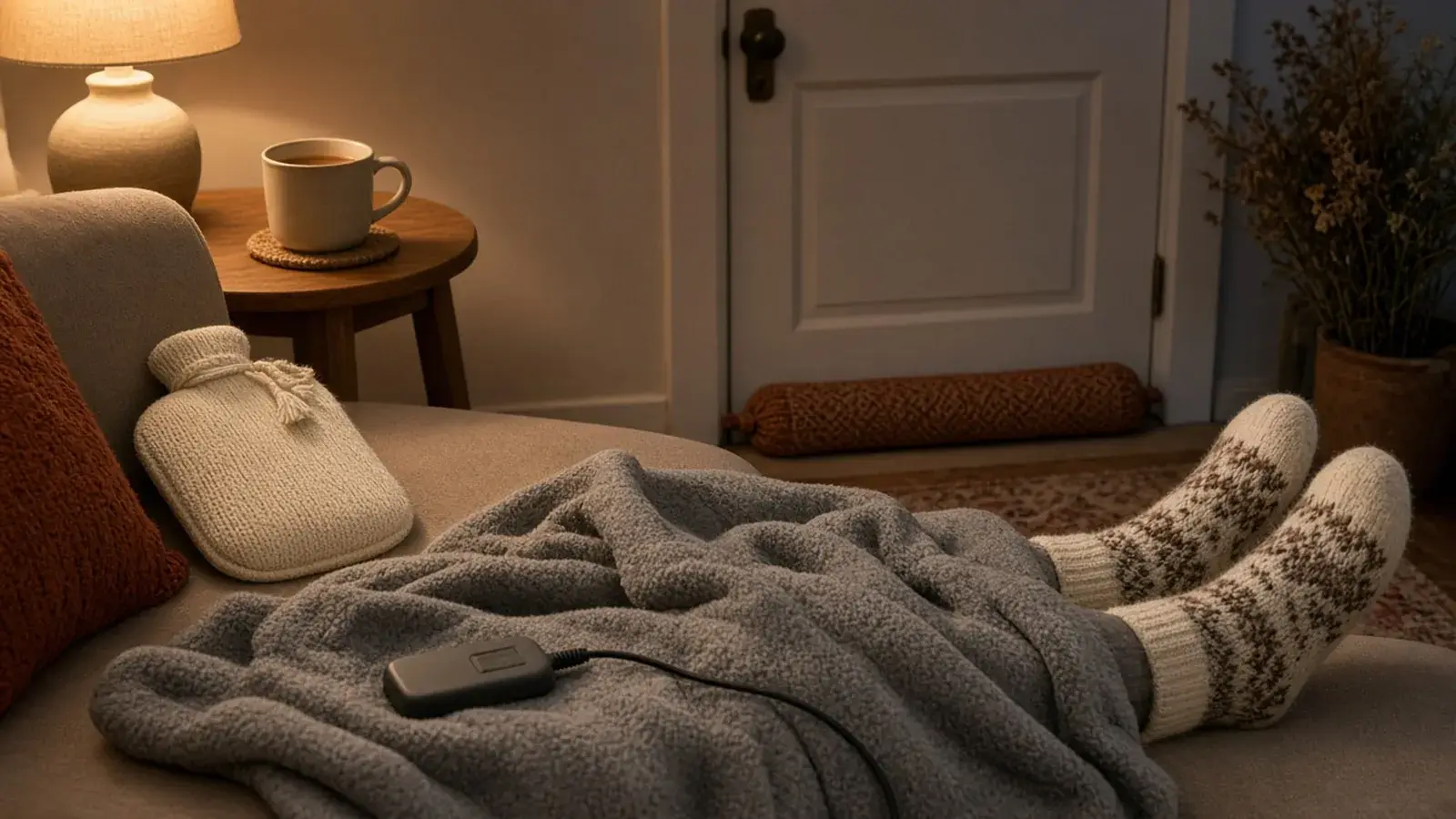
The biggest win is warming yourself rather than all the air: a heated throw uses only roughly 60–100 watts, and a hot water bottle uses no electricity at all. Add draught-proofing (door seals, draught excluder, thermal curtains) and keep your feet warm. That often lets you lower the room temperature by 1–2 °C without feeling cold. But don't let rooms drop much below 16 °C, or damp and mould can follow.
Why you feel cold even with the heating on
Feeling warm isn’t only about air temperature. Cold surfaces such as windows, external walls and tiled floors draw heat from your body. On top of that, draughts feel much colder than the thermometer shows. That’s why 20 °C can feel chilly, while 19 °C without draughts and with warm feet is perfectly comfortable.
1. Stop draughts
The cheapest and most effective step:
- Under the door: a draught excluder or self-adhesive door-bottom seal closes the gap to the hallway, stairwell or an unheated room.
- On windows: check the rubber seal is still flexible. Older windows can often be adjusted at the hinges (winter setting); otherwise self-adhesive sealing strips help. If you rent, ask before making permanent changes.
- Thermal curtains: drawn in the evening they create an insulating air layer in front of the cold glass. Don’t cover radiators, though.
Important: if you seal up, keep airing regularly. More in How to ventilate and heat in winter.
2. Warm your body, not all the air
Heated throw: on the sofa or in bed it warms you exactly where you are. At roughly 60–100 watts it uses only a fraction of what a fan heater does.
Foot warmer: cold feet make your whole body shiver. An electric foot warmer under the desk can make a big difference when working from home.
Hot water bottle: the classic with no electricity. Ideal for pre-warming the bed.
Clothing: layers, wool socks, thick-soled slippers and a wearable blanket are unbeatable value.
3. Take the chill off cold floors
Tiles and laminate feel cold because they conduct heat away quickly. A rug or runner, warm slippers and a mat under the desk help noticeably.
4. Heat where you are, not everywhere equally
- Bring the room you’re using to a comfortable temperature.
- Keep rarely used rooms a little cooler, but not much below 16 °C.
- Keep doors closed between rooms at different temperatures.
Careful with extra heaters
A fan heater is tempting, but expensive in the long run and needs particular care. When it makes sense and what to watch out for: Use a fan heater safely.
If your home still won’t warm up
If it won’t get warm even with radiators turned right up, there’s often a technical problem, such as air in the system, a stuck thermostatic valve or low pressure. If you rent, that’s one for your landlord or building management.
Products that actually help
Electric heated throw with auto shut-off
A warm blanket for the sofa with several heat settings and automatic switch-off. Washable once the controller is removed.
Link coming soon (TODO: Amazon UK/US Associates ID)Electric foot warmer
For icy feet at the desk or on the sofa, without heating the whole room.
Link coming soon (TODO: Amazon UK/US Associates ID)Hot water bottle with fleece cover
The classic with no electricity. The soft cover protects your skin and keeps the heat in longer.
Link coming soon (TODO: Amazon UK/US Associates ID)Door draught excluder / door seal
Closes the gap under the door so cold air from the hallway or stairwell stays out.
Link coming soon (TODO: Amazon UK/US Associates ID)Thermal blackout curtain
Thick curtain for a window or balcony door. Drawn in the evening, it keeps cold off the glass.
Link coming soon (TODO: Amazon UK/US Associates ID)Stop it happening again
- Find draughts: move a lit candle or incense stick slowly along door and window frames. If the flame flickers, there's a draught.
- Draw curtains in the evening, open them on sunny days to let the sun's warmth in.
- Close shutters or blinds at night; the air gap adds insulation.
- Lay rugs on cold tile or laminate floors.
- Keep radiators clear and bleed them if they gurgle or stay cold at the top.
FAQ
How much electricity does a heated throw use?
Typical heated throws and electric underblankets are rated around 60–120 watts, and often draw much less on low settings. Even at 100 watts that's only 0.1 kWh per hour. A 2,000-watt fan heater uses about twenty times as much in the same time.
Can I leave a heated blanket on all night?
Many heated throws switch off automatically after a set time, often about 3 hours. For the night there are dedicated electric underblankets. If in doubt, pre-warm the bed and switch it off before you fall asleep. Always follow the instructions.
How hot can the water in a hot water bottle be?
Don't use boiling water. Let freshly boiled water cool for a few minutes or use very hot tap water. Fill about two-thirds, squeeze out the air, close it tightly and always use a cover.
How long does a hot water bottle last?
Rubber ages. Many manufacturers print a production date on the bottle (often a small clock symbol). If it's brittle, cracked, sticky or several years old, replace it so it can't burst.
Should I switch the heating off completely during the day?
Switching off completely lets walls cool, and heating back up takes a lot of energy. It also raises the risk of mould. A moderate setback of a few degrees is better, see our guide on how to ventilate and heat in winter.
Related problems
Dehumidifier or Hygrometer: What Actually Helps Against a Damp Home?
Damp walls, wet windows, musty smell? How to measure humidity properly and tell when you really need a dehumidifier.
How to Ventilate and Heat in Winter to Prevent Mould
Short bursts of airing instead of tilted windows, the right temperature for each room and a simple daily routine to keep your home dry and warm.
Use a Fan Heater Safely: Avoid Fire Risks and Work Out Real Running Costs
Fan heaters warm up fast, but they use a lot of power and are a common cause of fires. How to use them safely and calculate the cost yourself.