
Smelly Washing Machine? Causes and the Fix in 5 Steps
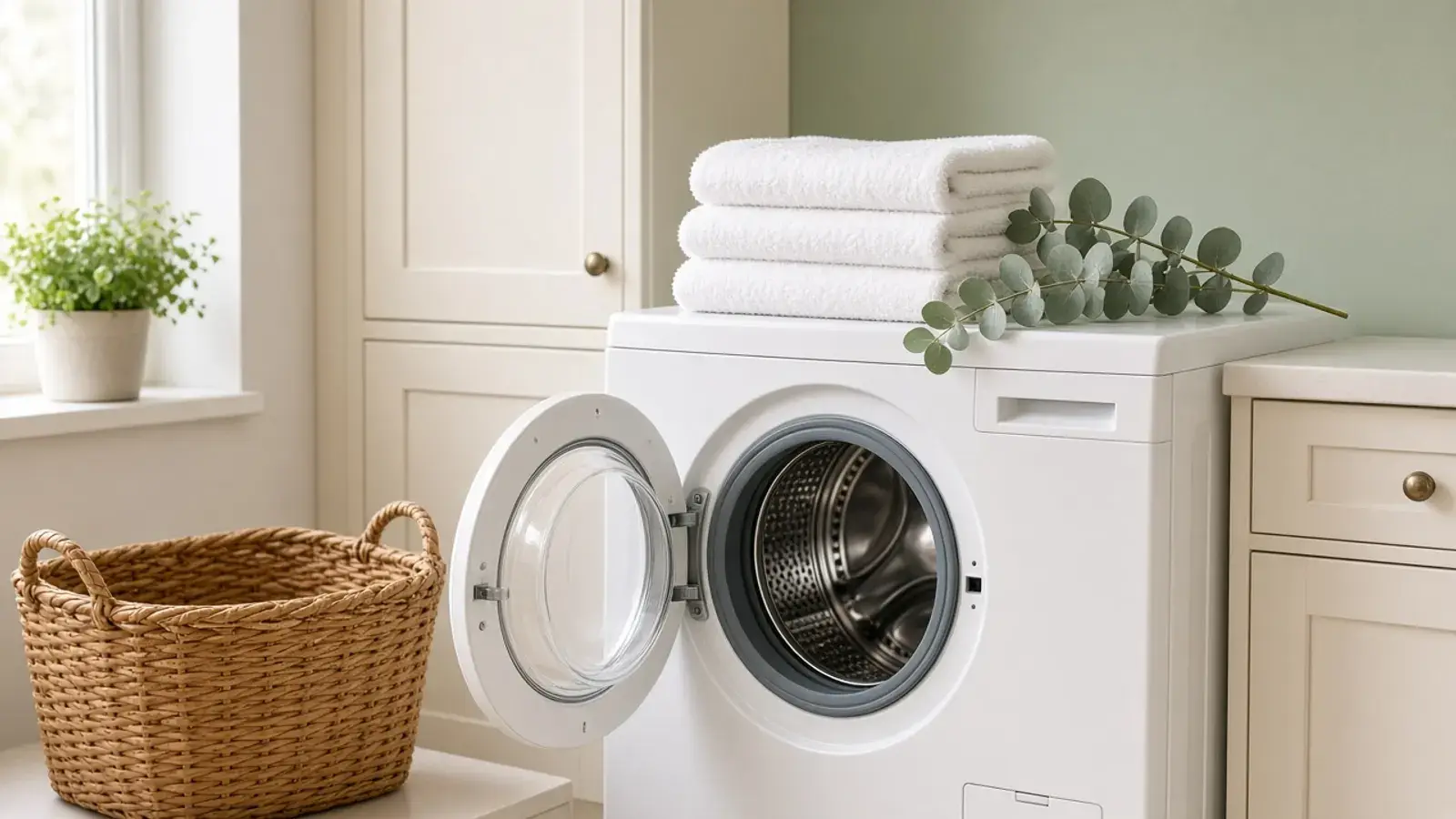
The smell almost always comes from a bacterial biofilm that builds up after many low-temperature washes. Clean the door seal, detergent drawer and filter, then run an empty hot wash at 60–90 °C with biological powder or a machine cleaner. Afterwards, always leave the door and drawer open and do a 60 °C wash regularly.
Where the smell comes from
Modern machines and detergents are designed for low temperatures. That saves energy but has a side effect: at 20, 30 or 40 °C many bacteria survive. Together with skin cells, fibres, grease and leftover fabric softener and liquid detergent, they form a slimy biofilm. It sits wherever things never dry properly: in the fold of the rubber door seal, in the detergent drawer, in the filter and in the outer drum behind the one you can see. As the bacteria break down organic matter, they produce that musty or rotten smell.
It’s made worse by:
- Washing almost only at 30 or 40 °C and rarely at 60 °C.
- Liquid and colour detergents, which contain no bleach.
- Lots of fabric softener.
- Keeping the door and drawer shut after washing.
- A blocked filter holding dirty water.
The fix in 5 steps
1. Clean the door seal
Gently pull back the rubber seal and look inside the fold. Water, hair, fluff, coins and even socks collect there, often with black grime. Wipe it out with warm water and a little washing-up liquid or all-purpose cleaner, then dry it. Black marks that won’t budge are often mould, so treat them with 70 % alcohol. If staining remains it has set into the rubber, but it’s usually harmless once the smell has gone.
2. Clean the detergent drawer
Pull the drawer right out. Most models have a release tab, and your manual will show where. Rinse it in warm water and scrub it with an old toothbrush. Don’t forget the housing the drawer sits in: the top of it often hides the worst build-up. Shine a torch in and clean it with a brush or cloth.
3. Clean the filter
It’s usually behind a small flap at the bottom front. Unplug the machine and lay down a towel and a shallow tray. If there’s an emergency drain hose, release the water through it first. Then slowly unscrew the filter, remove fluff, hair and objects, rinse it under the tap and screw it back firmly. Check afterwards that it doesn’t leak.
4. Run an empty hot wash
Now the actual clean. Run an empty cycle at the highest temperature (60–90 °C, ideally a cotton cycle) with one of these:
- Biological washing powder (a normal dose): the oxygen bleach breaks down biofilm.
- A washing machine cleaner used as the pack directs. This is handy when the smell is strong.
Repeat once if the smell is bad.
5. Let it dry
After the cycle, wipe the seal dry and leave the door and drawer open. Do this after every wash from now on.
Does it smell like drains?
If it smells more like sewage than mustiness, the cause may be the waste connection rather than the machine. A dry or missing trap lets drain gases rise. Check that the drain hose is fitted with a proper hook or connected to a trap. If it’s connected under the kitchen sink, that trap may be blocked.
When to call an engineer
If the smell returns within days of a thorough clean, the machine doesn’t drain properly, or water stays in the drum, the drain pump or a hose may be blocked. Get it checked, especially while it’s still under warranty.
Products that actually help
Washing machine cleaner (for an empty hot cycle)
Dissolves biofilm, grease and detergent residue. Good for a deep clean when it already smells.
Link coming soon (TODO: Amazon UK/US Associates ID)Biological washing powder (with oxygen bleach)
The best everyday prevention. Powder detergent with bleach keeps biofilm in check. Use it for towels and bedding at 60 °C.
Link coming soon (TODO: Amazon UK/US Associates ID)Microfibre cloths
For wiping the door seal and drawer dry after washing. Cheap, reusable and effective.
Link coming soon (TODO: Amazon UK/US Associates ID)Stop it happening again
- Leave the door and detergent drawer open after every wash so everything dries.
- Do a 60 °C wash at least once a month with biological powder, which is ideal for towels, bedding and underwear.
- Go easy on fabric softener, because it encourages greasy residue.
- Dose detergent correctly for your water hardness. Too much leaves a film.
- Take wet laundry out promptly rather than leaving it in the drum for hours.
- Wipe the seal and drawer every 1–3 months, and clean the filter every few months depending on use.
FAQ
Does vinegar fix a smelly washing machine?
Many manufacturers advise against it, because acid can damage rubber seals and hoses over time. A hot empty wash with biological powder or a machine cleaner tackles biofilm more reliably.
Do I need a laundry sanitiser?
In a healthy household, usually not. Regular 60 °C washes with biological powder and a machine that can dry out matter more. Exceptions include infectious illness in the home.
Why does my laundry smell musty after washing?
Either the machine itself has a biofilm problem (see above), or the laundry sat wet too long or dried too slowly. Rewash it at a suitable temperature and dry it promptly.
How often should I clean my washing machine?
An empty hot wash every 1–2 months if you mostly wash cool. If you regularly wash at 60 °C with powder, every few months is usually enough.
Related problems
Blocked Drain? How to Clear It Without a Plumber
Water draining slowly or standing in the basin? The right order: plunger, clean the trap, drain snake. And why chemical drain cleaner is the last resort.
Dehumidifier or Hygrometer: What Actually Helps Against a Damp Home?
Damp walls, wet windows, musty smell? How to measure humidity properly and tell when you really need a dehumidifier.
How to Ventilate and Heat in Winter to Prevent Mould
Short bursts of airing instead of tilted windows, the right temperature for each room and a simple daily routine to keep your home dry and warm.