
Blocked Drain? How to Clear It Without a Plumber
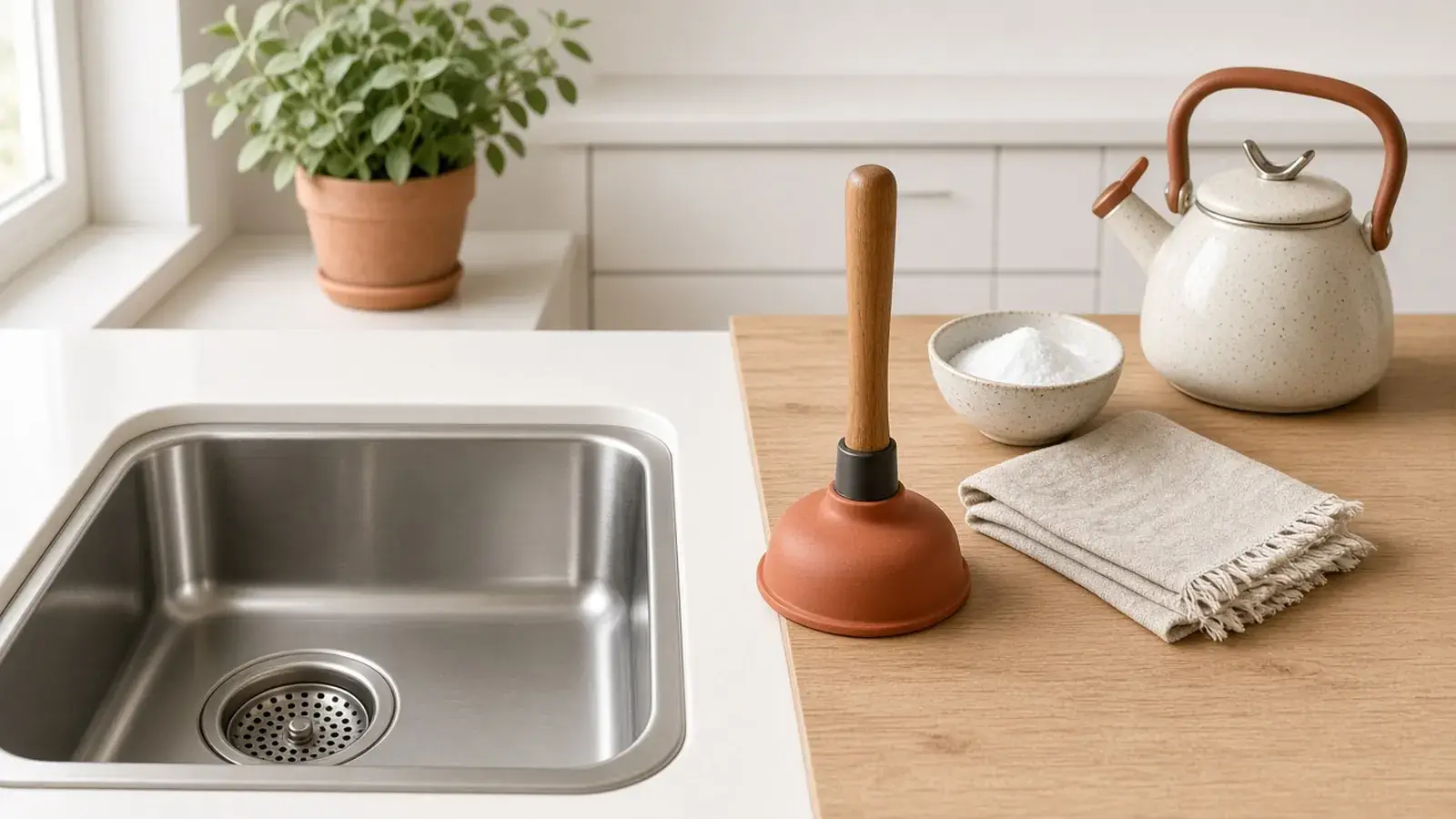
Work through it in this order: 1. hot water (for grease in the kitchen), 2. plunger, holding a wet cloth over the overflow, 3. unscrew and clean the trap (bucket underneath), 4. drain snake. That clears most blockages in basins, showers and kitchen sinks. Chemical drain cleaner is the last resort.
Where the blockage is
Before you start, look at the symptoms:
- Bathroom basin or shower: almost always hair and soap scum in the plug, the trap or just beyond it.
- Kitchen sink: usually grease that sets in the pipe and binds food scraps. Typically water drains more slowly at first, then not at all.
- Only one drain affected: the blockage is close to the basin, which you can usually handle yourself.
- Several drains at once, or gurgling elsewhere: the problem is deeper in the shared pipe. That usually needs a professional.
Stage 1: Clean the plug and try hot water
It sounds obvious but solves plenty of cases: pull out or unscrew the basin’s pop-up plug. There’s often a thick rope of hair and soap hanging off it. For shower drains, remove the cover and clean the hair trap.
In the kitchen, hot water helps with light grease blockages. Run the tap as hot as it goes for a while, or pour a pan of hot water down. A squirt of washing-up liquid first helps dissolve the grease.
Stage 2: The plunger
A plunger uses pressure and suction and clears most blockages. Here’s how to do it properly:
- Seal the overflow. Basins and baths have an overflow hole. Hold a wet cloth firmly over it, or the pressure escapes there. With a double sink, plug the second bowl.
- Run some water so the rubber cup sits about two to three centimetres under water. Water transmits far more pressure than air.
- Place the cup over the whole plughole.
- Pump firmly about 10–15 times, then pull off sharply. Repeat a few times.
- Test: if the water drains, flush through with hot water.
Stage 3: Clean the trap
The trap is the curved pipe under the basin. It holds water as a barrier against smells, but it also collects whatever gets caught in the drain.
- Put a bucket and cloth under the trap. Water will come out.
- Undo the slip nuts by hand, usually anticlockwise. If they’re stuck, use water pump pliers with a cloth in between.
- Remove the trap, empty it, clean it with a bottle brush and rinse.
- Check the washers: they must be clean and seated correctly.
- Screw everything back together, hand-tight only. Run water and check for drips.
For showers and baths, the trap is usually inaccessible under the tray. There, go straight from the plunger to the drain snake.
Stage 4: The drain snake
If the blockage is beyond the trap in the wall pipe, a drain snake will reach it. With the trap removed, feed the end straight into the wall pipe. For a shower drain, insert it from above.
Push the snake in slowly while turning until you feel resistance. Keep turning so the claw bores into the blockage or breaks it up. Move it back and forth a few times, then slowly pull it out. Often there’s a hair clump on the end. Afterwards, flush well with hot water, then clean and dry the snake.
What about home remedies and chemicals?
Bicarbonate of soda and vinegar fizz visibly, but do little against solid blockages. As routine care against smells, it’s fine.
Chemical drain cleaners usually contain caustic soda or acids that break down hair and grease. They can help when nothing mechanical works, but they have downsides: they’re corrosive, they’re hard on wastewater, they can damage older pipes and seals, and if they don’t work you’re left with caustic liquid in the basin. Then don’t plunge under any circumstances. If you use them, follow the instructions exactly, never mix products and wear goggles.
Enzyme or biological cleaners are gentler but slow. They’re better for prevention than for an acute blockage.
The best strategy: don’t let it block
A drain strainer costs little and saves you all this effort. Combined with the “no fat down the sink” rule and an occasionally cleaned plug, most drains stay clear for years. If a drain still smells, cleaning the trap often fixes it.
Products that actually help
Sink plunger with a large (about 14 cm) cup
The first tool for any blockage. A large cup fits basins, kitchen sinks and shower drains and builds up plenty of pressure.
Link coming soon (TODO: Amazon UK/US Associates ID)Drain snake / cleaning spiral (about 3 m)
When the plunger isn't enough: the flexible spiral with a claw pulls hair clumps and gunk out of the pipe beyond the trap, no chemicals needed.
Link coming soon (TODO: Amazon UK/US Associates ID)Stainless steel drain strainers (2-pack)
The cheapest prevention: catches hair in the shower and basin or food scraps in the sink before they clog the pipe.
Link coming soon (TODO: Amazon UK/US Associates ID)Stop it happening again
- Use drain strainers in the shower, bath and kitchen sink and empty them regularly. Hair is the main cause of blocked bathroom drains.
- No fat or oil down the sink. Wipe pans out with kitchen roll and bin it.
- Coffee grounds, rice and pasta go in the food waste, not the drain.
- Once a week, run a pan of hot tap water down the kitchen drain to shift early grease build-up.
- Every few weeks, lift out the basin's pop-up plug and wipe off hair and soap.
- Never flush wet wipes, cotton buds or sanitary products, even ones sold as "flushable".
FAQ
Does bicarbonate of soda and vinegar unblock a drain?
Only to a limited extent. The fizzing looks impressive, but the two largely neutralise each other. It can help with light build-up and smells, but usually not with a solid hair clump or grease plug. A plunger and drain snake work better.
Can I pour boiling water down the drain?
Hot water helps with grease in a kitchen sink with sound pipes. But very hot or boiling water can damage older plastic pipes, seals and ceramic toilets. Hot water from the tap, or water from the kettle that has cooled a little, is safer.
How often should I clean the trap?
In the bathroom, whenever water drains more slowly or it smells. For the kitchen sink, a check about once a year is worthwhile. Many traps unscrew by hand without tools.
When do I need a plumber?
If plunging, cleaning the trap and the drain snake don't work, several drains are affected, water comes up from another drain or there's a sewage smell. The blockage is then usually in the soil stack or main drain.
Related problems
Smelly Washing Machine? Causes and the Fix in 5 Steps
Musty smell from the drum, or laundry that smells after washing? How to clean your washing machine properly and stop the smell coming back.
Dehumidifier or Hygrometer: What Actually Helps Against a Damp Home?
Damp walls, wet windows, musty smell? How to measure humidity properly and tell when you really need a dehumidifier.
How to Ventilate and Heat in Winter to Prevent Mould
Short bursts of airing instead of tilted windows, the right temperature for each room and a simple daily routine to keep your home dry and warm.