
Wall Plug Won't Hold? How to Drill and Fix Properly for Your Wall
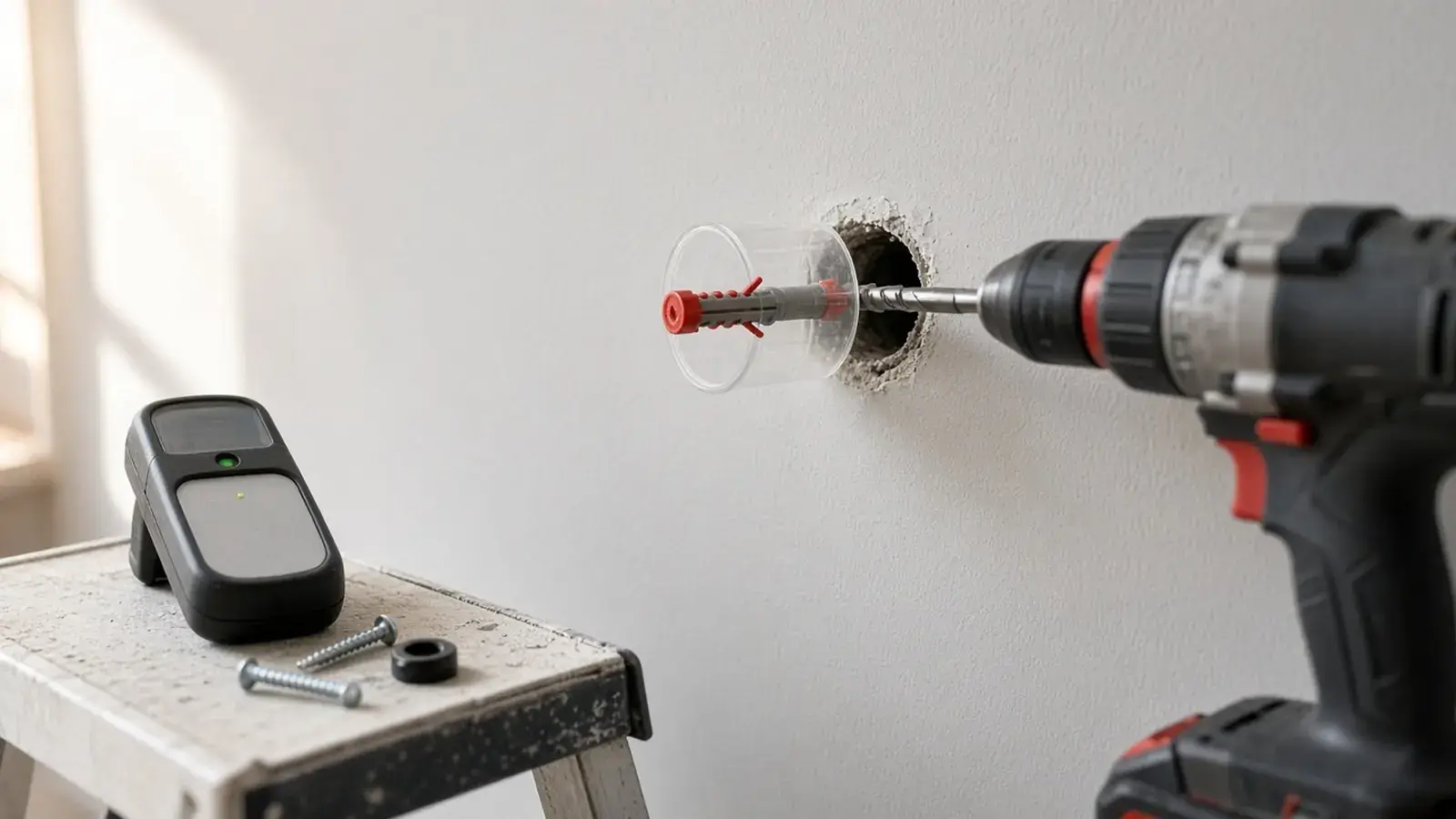
Usually the plug doesn't suit the wall or the hole is too big. Check the material by the dust first: grey and hard = concrete, red = brick (if the bit suddenly drops through: perforated/hollow brick), white and soft = plaster/plasterboard. Then: drill exactly the plug's diameter, no hammer mode in hollow brick, vacuum out the dust and use the right screw size. If the hole is torn out, use a resin/injection fixing or drill a new hole nearby. In plasterboard, use toggle or cavity anchors.
Why won’t the plug hold?
A wall plug holds by expanding (pressing against the hole wall), knotting in cavities, or undercutting behind a board. That only works if wall, hole, plug and screw match. The most common reasons for failure:
- Wrong plug for the wall, e.g. a simple expansion plug in plasterboard.
- Hole too big, because the bit wobbles, is blunt, or hollow brick was drilled with hammer action.
- Dust in the hole, so the plug doesn’t sit deep enough or can’t expand.
- Screw too thin or too short, so the plug doesn’t open.
- Plaster only: the plug sits in the soft plaster instead of the masonry.
Step 1: Identify the wall
| Dust / feel | Wall type | Drilling | Plug |
|---|---|---|---|
| grey, very hard, slow progress | concrete | hammer | expansion or universal plug |
| red, even | solid brick | hammer | expansion or universal plug |
| red, bit keeps “dropping” through | hollow/perforated brick | no hammer | long universal plug or injection |
| white, very soft, light | aerated concrete | no hammer | aerated-concrete or universal plug |
| white, thin board, hollow behind | plasterboard | no hammer | toggle or cavity anchor |
Step 2: Drill properly
- Scan for cables: sweep the area with a detector and avoid typical cable routes (vertically and horizontally from sockets and switches).
- Mark the spot; on tiles, add a piece of masking tape.
- Catch the dust: dust catcher on the bit or a folded note under the hole.
- Drill straight with a bit matching the plug diameter, about 10 mm deeper than the plug length.
- Vacuum out the hole, especially in concrete.
- Insert the plug flush and drive in a screw of the right diameter and length.
Step 3: Rescue a torn-out hole
- Next plug size up: drill the hole out cleanly with the next bit size and fit a larger plug. Works for slightly worn holes.
- Liquid or injection fixing: for broken-out holes, inject the compound and screw in after curing as per the pack. Holds even in crumbly masonry and hollow brick.
- Drill a new hole nearby: a few centimetres to the side, if the item allows. Fill the old hole with filler.
Special case: plasterboard
Ordinary expansion plugs just push the plasterboard apart and pull out. Plasterboard needs toggle, cavity or spiral anchors that brace behind the board. Fix heavy loads such as wall cabinets to the studs (metal or timber) where possible. Find them with a detector or by knocking.
Common mistakes
- Hammer-drilling hollow brick. The webs break and the hole becomes huge.
- Leaving dust in the hole. The plug doesn’t seat properly.
- Too thin a screw. The plug doesn’t expand and spins.
- Drilling without checking for cables. Hitting a wire is dangerous and expensive.
Products that actually help
Wall scanner / wire and metal detector
Finds metal (e.g. copper wiring, steel) and live cables in the wall. A small investment that prevents expensive and dangerous mistakes.
Link coming soon (TODO: Amazon UK/US Associates ID)Universal two-component wall plugs (6 x 30 mm)
Work in almost any wall: they expand in solid materials and knot in hollow brick and boards. A good all-round choice for the home.
Link coming soon (TODO: Amazon UK/US Associates ID)Plasterboard toggle anchors
For plasterboard and other boards: the anchor flips behind the board and spreads the load. Far stronger than expansion plugs in drywall.
Link coming soon (TODO: Amazon UK/US Associates ID)Liquid / injection wall plug kit
Rescues torn-out or oversized holes: inject the compound, let it cure briefly, then screw in or re-drill (follow the pack instructions).
Link coming soon (TODO: Amazon UK/US Associates ID)Drill dust catcher
Slides onto the drill bit and catches the dust right at the wall. Ideal above a sofa, bed or carpet.
Link coming soon (TODO: Amazon UK/US Associates ID)Masonry drill bit set
Carbide-tipped bits in common sizes for concrete and masonry. Blunt bits make oval, oversized holes that no plug will grip.
Link coming soon (TODO: Amazon UK/US Associates ID)Stop it happening again
- Match drill bit and plug diameter (6 mm plug = 6 mm bit) and keep the drill straight.
- Drill about 10 mm deeper than the plug is long and vacuum or blow out the dust thoroughly.
- Use the right screw size for the plug (it's on the pack, e.g. 4–5 mm for a 6 mm plug). The screw must pass through the plug.
- Hammer mode only in concrete and solid brick; drill hollow brick, aerated concrete and blocks with cavities without hammer.
- Set the plug flush and not just in the plaster, or the plaster will break away.
- For heavy loads use several fixing points and follow the manufacturer's load ratings.
FAQ
How long should the screw be?
Rule of thumb: plug length + thickness of the item being fixed + about one screw diameter. For a 6 x 30 mm plug and a 15 mm board, that's around 50 mm. The screw should poke out of the plug's tip so it expands fully.
Why does the plug spin in the hole?
The hole is too large or broken out, the plug too small, or the wall too soft or hollow. Fix: go up one plug size, use a liquid/injection fixing, or use a toggle or cavity anchor for hollow walls.
How do I drill with hardly any dust?
Put a dust catcher on the bit, or stick a folded sticky note under the hole as a little pocket. Even better: have someone hold the vacuum nozzle right below the hole. Vacuum out the hole afterwards, which also improves the grip.
Can I drill into tiles?
Yes, with a tile or glass bit and no hammer action. A piece of masking tape on the tile stops the bit from wandering. Drill through the tile rather than the grout line, as grout breaks out more easily. Switch to a masonry bit only once you're through the tile.
Related problems
Stripped Screw? 6 Ways to Get It Out Anyway
Cross head chewed up and the bit keeps slipping? How to remove a stripped screw with a rubber band, impact driver, screw extractor or pliers, from easy to hard.
Weak Car Battery in Winter: Test, Charge and Jump-Start
Car struggling to start in the cold? How to test the battery, charge it properly and jump-start in the correct order.
Frozen Windscreen: Clear It Fast Without Scratches
Ice scraper, de-icer spray or a cover? How to clear your windscreen quickly in the morning without scratches, cracks or trouble with the police.