
Stripped Screw? 6 Ways to Get It Out Anyway
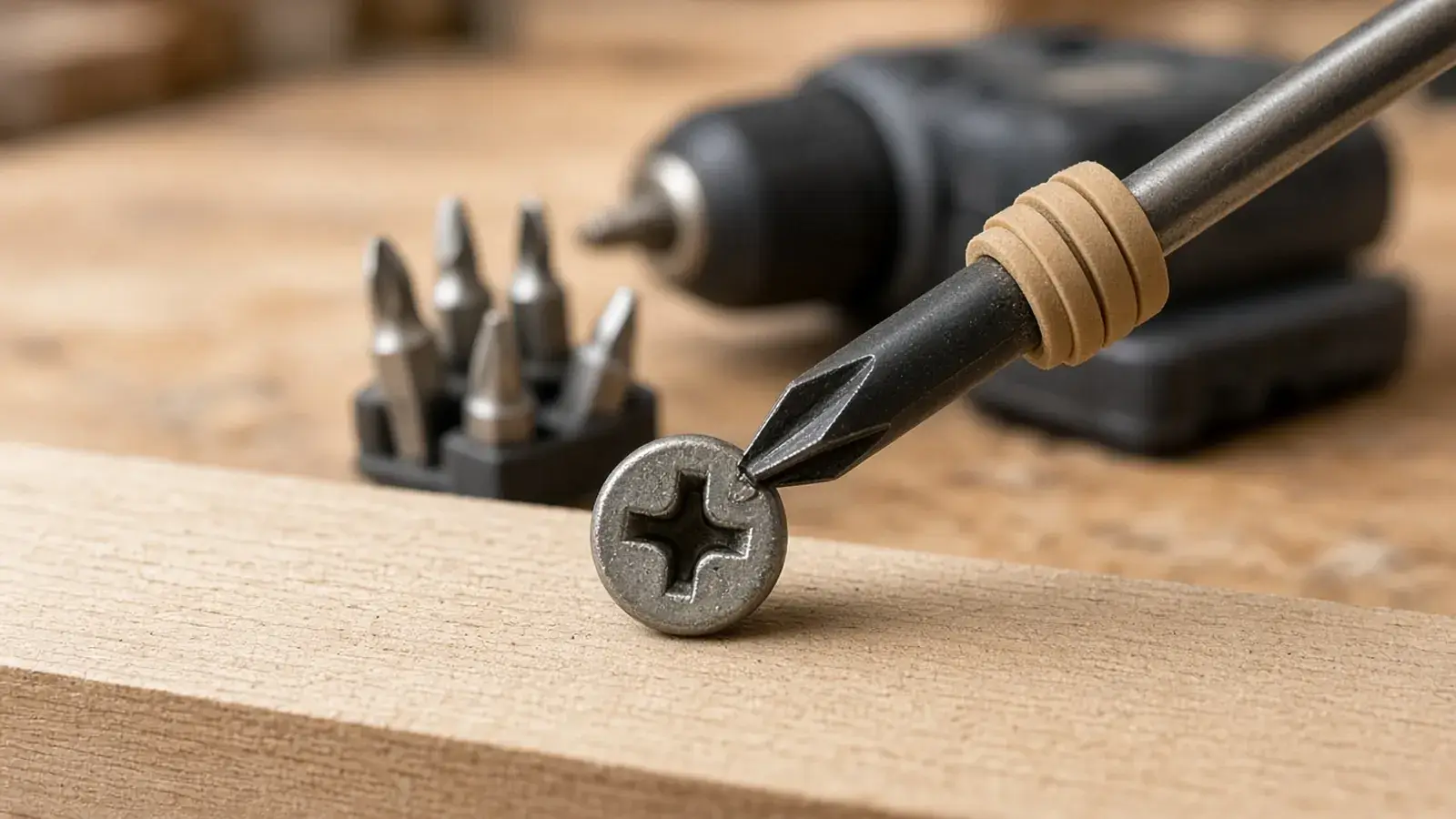
Start with the gentlest fix: a new, well-fitting bit (often one size larger, or PZ instead of PH) with firm pressure and low speed, with a wide rubber band between bit and head if needed. If the screw is seized, use a manual impact driver. Only when the head is completely destroyed should you reach for a screw extractor (left-hand thread). If the head sticks out, simply grab it with pliers.
Why do screws strip in the first place?
A cross-head recess is designed so the bit rides up and out when torque gets too high (“cam-out”). That protects the screw and tool in theory, but every slip chews a little metal out of the head. Typical causes:
- The wrong bit, e.g. PH in a PZ screw, or a bit that is too small.
- A worn bit with rounded edges.
- Not enough pressure, or driving at an angle.
- Too much torque, e.g. a drill driver set to drill mode.
- Seized screws held by rust, paint or resin.
The sooner you react, the easier it is. Once the bit slips twice: stop, and don’t keep grinding the head round.
Method 1: A new, larger bit and lots of pressure
First try a fresh bit, and for cross heads go one size up or switch type (PZ instead of PH). Push with your body weight in line with the screw and turn slowly by hand or on the lowest drill setting. The bit often still grips in the deeper, undamaged part of the recess.
With hex and Torx heads, a slightly larger Torx bit gently tapped into the rounded recess sometimes does the trick.
Method 2: Rubber band or steel wool as filler
Lay a wide rubber band flat over the screw head and push the bit through it. The rubber fills the worn areas and adds grip. A piece of fine steel wool or a dab of valve grinding paste works too.
Method 3: Penetrating oil and shock for seized screws
For metal screws that are stuck rather than stripped: apply penetrating oil, wait 10–15 minutes, then give the screwdriver a few light taps with a hammer. The vibration breaks up rust in the thread. With screws in wood, it sometimes helps to turn them slightly tighter first to break the thread free.
Method 4: Manual impact driver
The manual impact driver is the most underrated tool in the box. Set it on the screw, select the “loosen” direction and strike it with a hammer. The blow forces the bit into the head and converts into a short twist at the same time. Even rusted screws come loose this way without the bit slipping. It suits metal and solid materials, less so thin sheet metal or furniture panels.
Method 5: Screw extractor (when the head is destroyed)
- Mark the centre of the head with a centre punch.
- Drill a few millimetres deep with a metal drill bit sized for your extractor (it’s on the packaging), straight and at low speed.
- Insert the left-hand-thread extractor and turn it anticlockwise with a tap wrench or spanner. It bites into the hole and takes the screw with it.
- Turn evenly and don’t jerk or lever, or the brittle extractor may snap.
Tip: With a left-hand drill bit, the screw sometimes comes out while you are still drilling.
Method 6: Pliers or cut a slot
If the head sticks out, grab it with locking pliers or water pump pliers and twist it out. If it is wide enough, cut a slot with a hacksaw or multi-tool and use a large flat-blade screwdriver.
Which method when?
| Situation | Best method | Effort |
|---|---|---|
| Head slightly rounded, screw not tight | new/larger bit, rubber band | low |
| Screw rusted in, head still OK | penetrating oil + impact driver | medium |
| Head completely destroyed | screw extractor | medium to high |
| Head sticks out | locking pliers, cut a slot | low |
Common mistakes
- Carrying on while the bit slips. Every turn makes it worse.
- High drill speed. Slow and controlled is crucial with damaged heads.
- Drilling too big a hole for the extractor. Then there’s not enough material left for it to grip.
- Working without safety glasses. Snapped bit tips are sharp and fast.
Products that actually help
Screw extractor set (sizes 1–5)
For the hard case: drill a small hole into the head and turn in the left-hand-thread extractor. Sizes 1–5 cover common wood and machine screws.
Link coming soon (TODO: Amazon UK/US Associates ID)Manual impact driver set with bits
A hammer blow drives the bit deep into the head while turning it slightly. Ideal for rusted or painted-over screws.
Link coming soon (TODO: Amazon UK/US Associates ID)Quality screwdriver bit set (PH, PZ, Torx)
Most screws get stripped by the wrong or a worn bit. A set of good PH, PZ and Torx bits is the best prevention.
Link coming soon (TODO: Amazon UK/US Associates ID)Penetrating oil / rust release spray
For rusty screws in metal: spray, wait 10–15 minutes, then turn. It lowers the risk of damaging the head further.
Link coming soon (TODO: Amazon UK/US Associates ID)Stop it happening again
- Match the bit to the screw: Pozidriv (PZ, with small extra notches) and Phillips (PH) look similar but don't fit each other properly.
- Bin worn bits with rounded edges straight away.
- Push firmly in line with the screw and keep the driver straight so the bit can't cam out.
- Set your drill driver's torque clutch low and increase it gradually.
- Use Torx screws where you can, as they slip far less than cross heads.
- Pre-drill in hardwood so the screw needs less force.
FAQ
Does the rubber band trick really work?
Often, for a slightly stripped cross head. A wide rubber band fills the gaps between bit and head and adds grip. Turn slowly by hand with lots of pressure. If the head is badly destroyed, it won't help any more.
Can I use a drill driver with the extractor?
Yes, but in reverse, at low speed and without hammer mode. Many pros prefer turning the extractor by hand with a tap wrench or spanner, because you can feel when it is about to bind.
What if the extractor snaps?
Stop drilling, because hardened steel ruins normal drill bits. In wood you can cut around the screw with a plug cutter or hollow drill and fill the hole with a wooden dowel. In metal parts, it's a job for a workshop.
How do I tell PH from PZ?
Pozidriv screws (PZ) have fine diagonal lines between the arms of the cross. Phillips (PH) has the cross only. A PZ bit in a PZ screw sits noticeably tighter.
Related problems
Wall Plug Won't Hold? How to Drill and Fix Properly for Your Wall
Plug spinning or hole torn out? Identify the wall, choose the right plug, rescue damaged holes and drill almost dust-free, with a safety check for cables and pipes.
Weak Car Battery in Winter: Test, Charge and Jump-Start
Car struggling to start in the cold? How to test the battery, charge it properly and jump-start in the correct order.
Frozen Windscreen: Clear It Fast Without Scratches
Ice scraper, de-icer spray or a cover? How to clear your windscreen quickly in the morning without scratches, cracks or trouble with the police.