
Small Kitchen Storage: 9 Ideas That Really Free Up Space
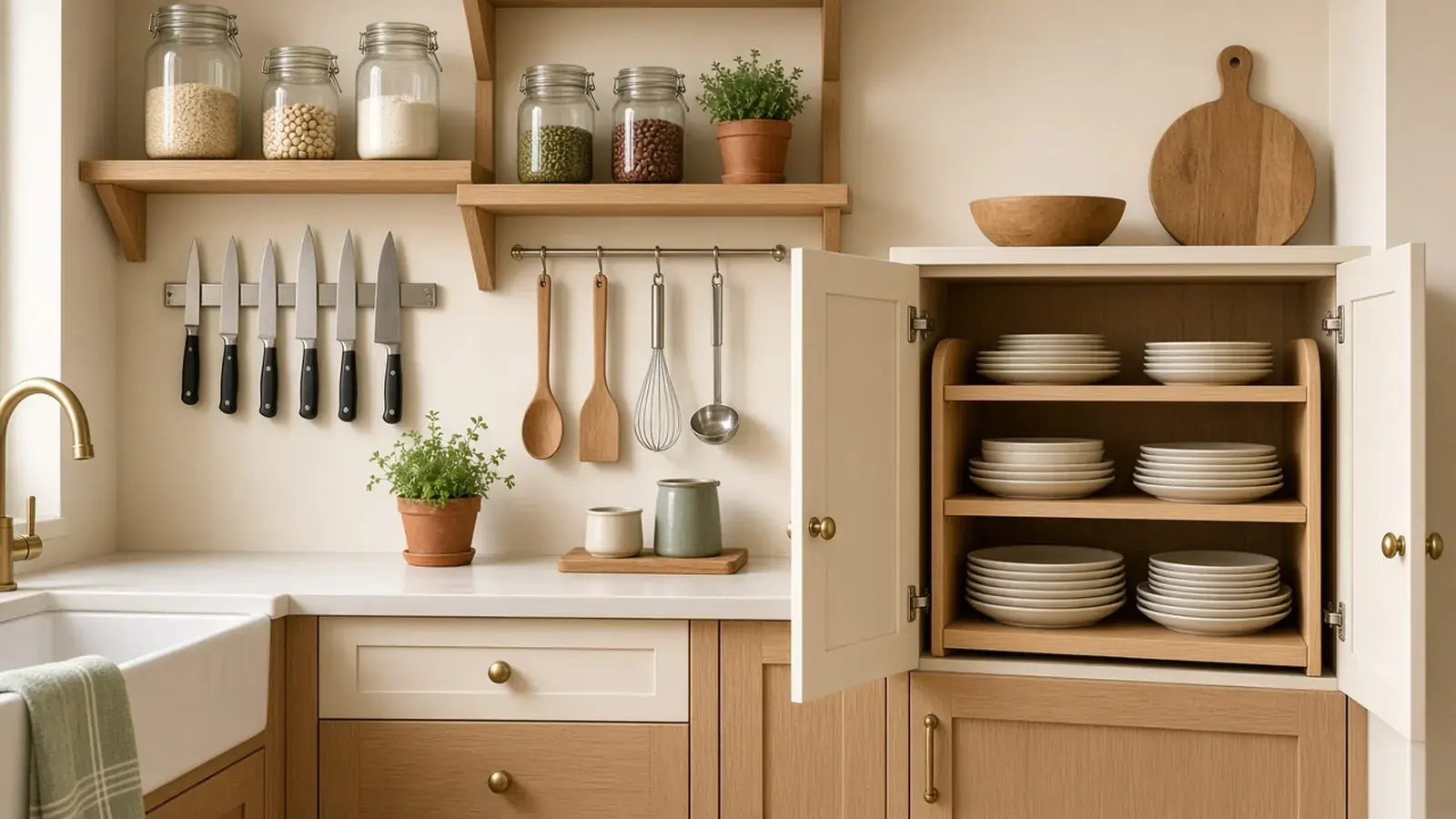
Most unused space in a small kitchen is vertical. Stackable shelf inserts double the space in cupboards, pull-out under-sink organisers make that awkward space usable, and a magnetic strip and wall rail get knives and utensils off the worktop. But declutter first: anything you haven't used in a year doesn't need storage.
Declutter first, then organise
The most common mistake is buying new organisers before you know what actually belongs in the kitchen. Take an afternoon and empty one cupboard at a time completely. Sort into three piles:
- Used daily or weekly: stays at grabbing height.
- Used rarely: goes up high, to the back or out of the kitchen altogether, such as a hall cupboard.
- Never used, broken, duplicate: donate, sell or bin.
Only then will you see how much space you really need, and you’ll buy only the organisers you’re missing.
1. Use the height inside cupboards
A typical wall cupboard has 30–35 cm per shelf, but plates and mugs are only 3–10 cm tall. That leaves a lot of air. Stackable shelf inserts split the shelf into two levels: plates below, bowls or mugs above. That doubles the usable space without fitting anything.
2. Sort out under the sink
The cupboard under the sink is often a black hole of cleaning products, bin bags and sponges. A two-tier under-sink organiser fits around the trap. With pull-out baskets, you slide things forward instead of reaching to the back on your knees. Bottles stand securely and don’t topple. If you have children, fit a child lock to the door.
3. Make spices visible
Spices stacked behind each other mean you buy paprika three times and never find the cumin. A tiered rack puts jars in rows, each row higher than the one in front, so every label is visible. Alternatively, use shallow drawer inserts where the jars lie flat.
4. Walls instead of worktop
Everything on the worktop takes away chopping space. A magnetic strip replaces the knife block. A wall rail with S-hooks holds wooden spoons, ladle, whisk, tea towels and small baskets for spices or kitchen roll. Fitted under the wall cupboards, everything is to hand yet out of the way.
5. Use the inside of cupboard doors
The inside of cupboard doors is almost always forgotten. Slim over-door baskets or small stick-on hooks hold oven gloves, foil, cling film, measuring jugs or pan lids. Make sure the door still closes and nothing hits the shelves.
6. Store pans and trays upright
Stacked pans are impractical: you always need the bottom one first. A pan rack or simple vertical dividers stand pans, baking trays, chopping boards and trays side by side. Just pull out what you need.
7. Use the gaps
Beside the fridge, between a cupboard and the wall, or on top of the fridge, there are often narrow gaps. A slim rolling trolley, a narrow shelf or a basket on top of the fridge for rarely used items turns them into storage.
8. Tame the corners
Corner cupboards are deep and hard to reach. A turntable (lazy Susan) brings things at the back to the front. For corners in wall cupboards, two-level corner shelves work well.
9. Matching containers for dry goods
Half-empty packets of flour, pasta, rice and cereal take up lots of space and are hard to see. Stackable, clear storage containers with the same footprint use the cupboard better and show you when something is running low. Label them with the contents and, if useful, the best-before date.
The right order
Declutter, then measure, then buy. Measure the width, depth and height of your shelves and the space around the trap before ordering organisers. And start with the cupboard that annoys you most every day. Success there will motivate you for the rest.
Products that actually help
Stackable kitchen shelf inserts (metal)
Creates a second level in wall cupboards for plates, mugs or bowls. No tools needed, just stand them in the cupboard.
Link coming soon (TODO: Amazon UK/US Associates ID)Two-tier pull-out under-sink organiser (2-pack)
Makes the chaotic space under the sink usable: two levels with sliding baskets, so you can reach what's at the back.
Link coming soon (TODO: Amazon UK/US Associates ID)Tiered spice rack, stackable and expandable
A stepped rack for spices, tins and jars. Everything stays visible instead of disappearing behind each other. Fits in cupboards or on the worktop.
Link coming soon (TODO: Amazon UK/US Associates ID)Bamboo magnetic knife strip (about 40 cm)
Gets the knife block off the worktop. Knives hang securely on the wall, are quick to grab and their edges are better protected.
Link coming soon (TODO: Amazon UK/US Associates ID)Stop it happening again
- One in, one out: for every new gadget or mug, an old one goes.
- Get rid of duplicates straight away: three whisks, twelve mugs and freebies take up space you need elsewhere.
- Sort by frequency: daily items at grabbing height, seasonal ones (biscuit cutters, roasting tin) up high or in another room.
- Once a quarter, check your food cupboard and use up or give away duplicates and items close to their date.
- Keep the worktop clear: only appliances you use every day get to live there.
FAQ
How do I add storage in a rented kitchen without drilling?
Use shelf inserts and organisers inside cupboards, over-the-door hooks and baskets, slim freestanding shelves or a trolley, and an adhesive magnetic strip for light utensils. Test adhesive fixings on the tiles first and respect the load rating.
What do I do with pots and pans?
Store frying pans upright in a pan rack instead of stacked, so you don't have to unstack the pile. Nest saucepans and keep lids separately in a lid holder on the cupboard door or upright in a drawer.
Is a slim trolley worth it in a small kitchen?
Yes, if there's a narrow gap beside the fridge or at the end of the run. Slim 10–20 cm trolleys hold bottles, oil and spices and roll out for cleaning.
Open shelves or wall cupboards?
Open shelves feel lighter and make small kitchens look bigger, but they collect dust and grease. They suit everyday crockery and glasses, less so things you rarely use. Closed cupboards are more practical for food and odds and ends.
Related problems
Dehumidifier or Hygrometer: What Actually Helps Against a Damp Home?
Damp walls, wet windows, musty smell? How to measure humidity properly and tell when you really need a dehumidifier.
How to Ventilate and Heat in Winter to Prevent Mould
Short bursts of airing instead of tilted windows, the right temperature for each room and a simple daily routine to keep your home dry and warm.
Cold Feet, Cold Home: Stay Warm and Save on Heating
Heated throw, hot water bottle, draught excluder & co.: how to get warm at home without turning the heating right up. With safety tips.