
How to Get Rid of Fruit Flies: What Really Works (and What Doesn't)
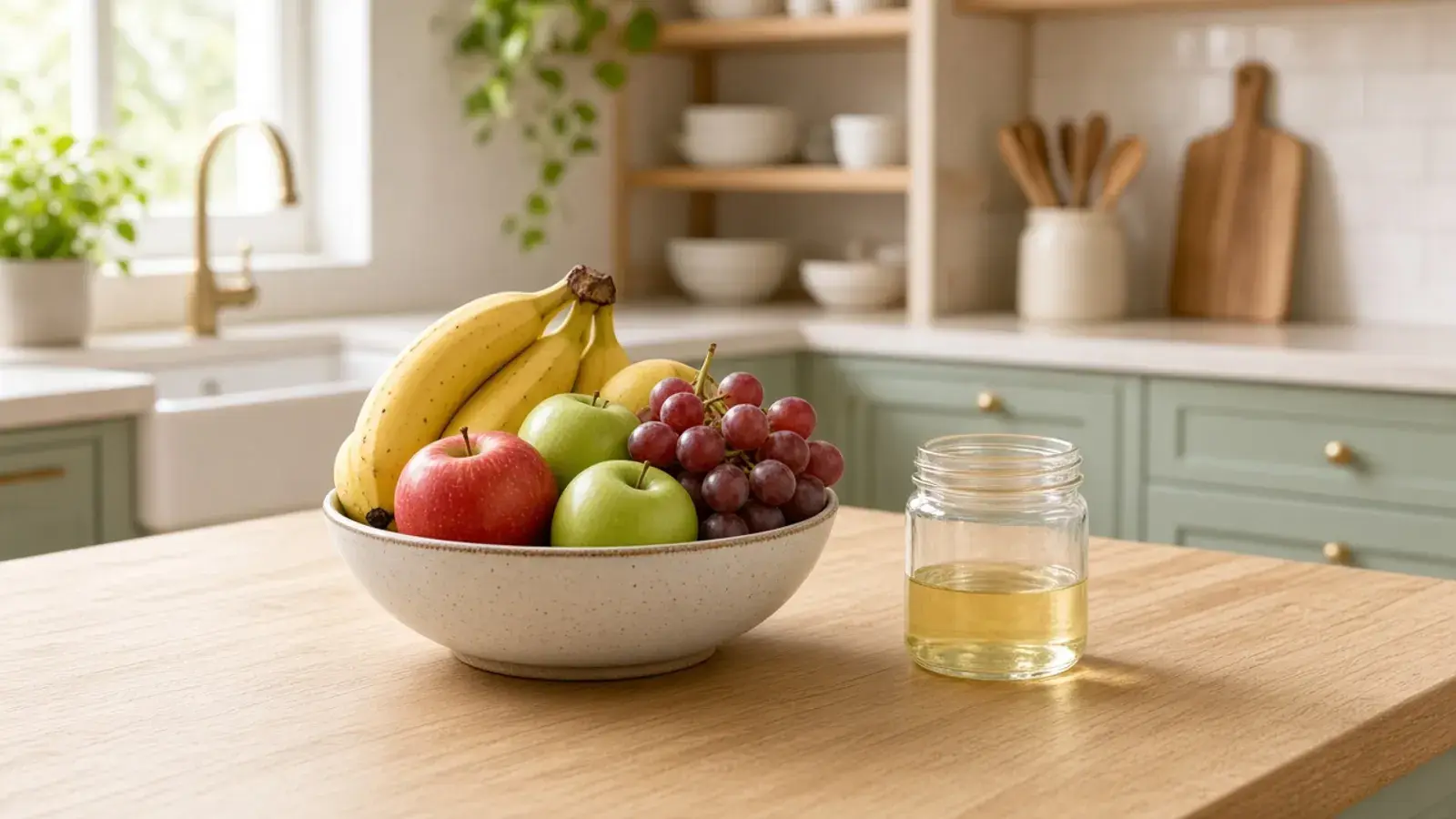
Two steps: remove breeding spots (overripe fruit, food waste, empty bottles, drains) and set a trap: apple cider vinegar with a splash of juice and one drop of washing-up liquid in a small bowl. Within about a week they're usually gone, as long as you keep the sources clean.
Why fruit flies move into your kitchen
Fruit flies (Drosophila) are drawn to the smell of fermentation: acetic acid, alcohol and ripe fruit. They can find a bruised banana or a drop of wine in a glass from a surprising distance. Females lay their eggs there, and the larvae feed on the yeasts in fermenting fruit.
The problem is how fast they breed. At room temperature, egg to adult takes just 8–12 days, and each female lays several hundred eggs in her short life. Five flies can easily become hundreds within two weeks, especially in late summer when fruit ripens quickly.
Step 1: find and remove the breeding spots
Traps only catch adults. Unless you deal with the source, new flies hatch every day. Check:
- The fruit bowl: anything overripe, bruised or mouldy? Bin it and wash the bowl.
- Food and general waste: empty, wash and dry the bins.
- Empty bottles: rinse beer, wine and juice bottles. A drop of residue is enough to breed in.
- Potatoes and onions: one rotten one in the vegetable rack is easy to miss.
- Drains and sink traps: organic build-up attracts flies. Pour several litres of hot water down and clean the strainer.
- Dishcloths, sponges, vases and plant saucers with standing water.
Step 2: the trap that really works
- Pour 3–4 tablespoons of apple cider vinegar into a small bowl or glass. White wine vinegar works too, but cider vinegar attracts more.
- Add a splash of juice or a piece of ripe fruit to make it more tempting.
- Stir in one drop of washing-up liquid. This is the key trick: it breaks the surface tension, so flies sink instead of landing on top.
- Optionally cover the bowl with cling film and poke a few small holes with a toothpick. Flies get in but struggle to get out.
- Place it right next to the fruit bowl or the bin and refresh it every 2–3 days.
Alternatives: the last bit of red wine in a bottle, plus a drop of washing-up liquid, works too. Ready-made traps use the same principle and are cleaner and reusable. Yellow sticky traps catch fruit flies poorly, because they’re meant for fungus gnats.
What doesn’t really help
- Insect spray in the kitchen. It isn’t needed, doesn’t belong near food and doesn’t touch the larvae.
- Essential oils, basil or cloves. There’s little evidence they work. They smell nice but don’t replace hygiene and a trap.
- Traps alone, next to a bowl full of ripe bananas. The fruit wins.
How long does it take?
Once the sources are gone, most adults are caught within 3–5 days. A few stragglers from eggs already laid may keep appearing for about a week, so keep the trap out for at least 7–10 days. If new flies keep coming after that, there’s a breeding spot you’ve missed, often the drain, the recycling bag or the food cupboard.
The 2-minute summer routine
- Each evening, check the fruit bowl and move anything soft to the fridge or the bin.
- Take food waste out at least every other day.
- Rinse glasses and bottles instead of leaving residues overnight.
- Keep one trap out permanently next to the fruit to catch the first flies before they lay eggs.
Products that actually help
Reusable fruit fly trap
Non-toxic and refillable with vinegar or fruit scraps. It looks tidier than an open bowl.
Link coming soon (TODO: Amazon UK/US Associates ID)Kitchen compost caddy with tight lid
Food waste is breeding ground number one. A well-sealed caddy keeps flies out.
Link coming soon (TODO: Amazon UK/US Associates ID)Foldable mesh food covers
Fine mesh over the fruit bowl, cakes or barbecue food stops flies laying eggs. They fold flat for storage.
Link coming soon (TODO: Amazon UK/US Associates ID)Stop it happening again
- Rinse fruit after shopping, because eggs often come home with it.
- Keep ripe fruit in the fridge, store bananas separately, and use or bin bruised fruit straight away.
- Empty food waste daily in summer, use a lidded caddy and wash it now and then.
- Rinse empty bottles, juice cartons and jars before recycling.
- Swap or hot-wash dishcloths and sponges regularly, and flush drains with hot water.
- Keep recycling bags closed and out of the warm kitchen.
FAQ
Where do fruit flies suddenly come from?
Usually from shop-bought fruit that already carries eggs or larvae. In warm conditions they mature in just over a week, and each female lays several hundred eggs. That's why they seem to appear from nowhere.
Are fruit flies harmful?
They don't bite or sting, but they can carry bacteria and yeasts from spoiled food to fresh food. Wash any fruit they've landed on.
Fruit fly or fungus gnat?
Fruit flies are brownish, often red-eyed, and hang around fruit. Fungus gnats are black, slender and hover around houseplants. For gnats, use yellow sticky traps and a layer of sand on the soil. Vinegar traps barely work on them.
Why isn't my vinegar trap working?
Usually because there's no washing-up liquid, so the flies can stand on the surface and fly away. Also, as long as overripe fruit is lying out in the open, it beats any trap.
Related problems
Dehumidifier or Hygrometer: What Actually Helps Against a Damp Home?
Damp walls, wet windows, musty smell? How to measure humidity properly and tell when you really need a dehumidifier.
How to Ventilate and Heat in Winter to Prevent Mould
Short bursts of airing instead of tilted windows, the right temperature for each room and a simple daily routine to keep your home dry and warm.
Cold Feet, Cold Home: Stay Warm and Save on Heating
Heated throw, hot water bottle, draught excluder & co.: how to get warm at home without turning the heating right up. With safety tips.