
How to Remove Limescale from Taps and Shower Glass
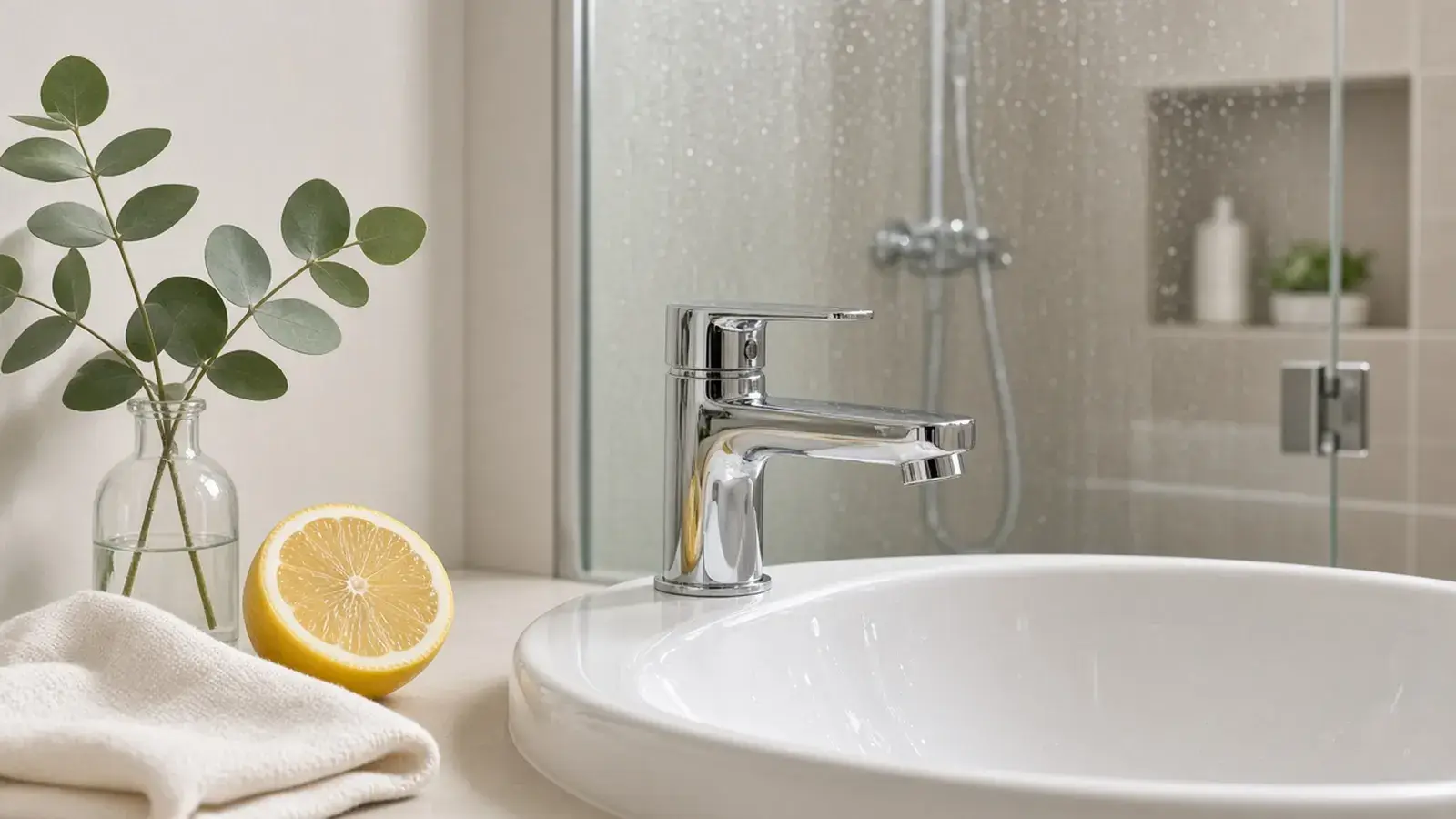
Light limescale comes off with diluted citric acid or vinegar and water: spray it on, or wrap a soaked cloth round the tap, leave for 10–15 minutes, wipe with a soft sponge, rinse thoroughly with clean water and buff dry. Unscrew the aerator and soak it in the solution. To stop it coming back, there's one trick: squeegee after every shower.
Where the white marks come from
Tap water contains dissolved minerals, mainly calcium and magnesium compounds. When a droplet dries on a tap or shower screen, those minerals stay behind. First as an almost invisible film, then after a few weeks as a white ring that combines with soap residue into a stubborn grey layer.
How fast this happens depends on your water hardness. In hard-water areas, a shower screen that isn’t squeegeed looks cloudy within days. It’s not just cosmetic either: in aerators and shower heads, limescale blocks the nozzles, the spray becomes uneven and splashes.
What you need
- Citric acid (liquid or powder) or white vinegar
- A spray bottle
- Soft sponges and microfibre cloths, not a scourer
- An old toothbrush for crevices
- Rubber gloves
- A small bowl or freezer bag for the aerator and shower head
Step by step: descaling taps
- Mix the solution. Dilute liquid citric acid as directed. For powder, use about 1–2 tablespoons in 500 ml of cold or lukewarm water. Alternatively, mix vinegar and water 1:1.
- Apply. Spray onto the tap. For thick deposits, soak kitchen roll or a cloth in the solution and wrap it round the tap so the acid stays in place.
- Leave it. 10–15 minutes is usually enough. Don’t leave acid on chrome for hours.
- Wipe. Rub with a soft sponge, and use the toothbrush in crevices and at the spout.
- Rinse thoroughly. Remove all acid residue with clean water. This matters for seals and finishes.
- Buff dry. Polish with a dry microfibre cloth. Only then does chrome really shine.
Descaling the aerator and shower head
The aerator is the small mesh insert at the end of the tap. It usually unscrews by hand or with the matching key (anticlockwise; a cloth protects the finish from scratches). Soak the parts in citric acid solution for 30–60 minutes, brush, rinse and screw back on. Make sure the washer and meshes go back in the right order. Taking a phone photo first helps.
The shower head is the same. If it won’t come off, fill a freezer bag with the solution, pull it over the head and secure it with a rubber band. After an hour, remove it, rub the nozzles with a finger or brush and run the water for a minute. Many shower heads have rubber nozzles that release limescale when you rub them.
Getting shower glass clear again
Shower screens are large and vertical, so liquid runs off quickly. A foaming spray that clings works better. Apply generously, leave for 15 minutes and wipe with a soft sponge in circular motions. Then rinse well with the shower and squeegee.
Thick, old layers sometimes need two or three rounds. Don’t reach for a blade or hob scraper if the glass is coated. While you’re at it, check the silicone seals: dark spots are more likely mould than limescale. See how to remove mould in the shower.
Surfaces that need extra care
Natural stone such as marble, travertine and limestone contains calcium itself. Acid etches it and leaves dull marks that can’t be polished out. Watch your spray around stone vanity tops and windowsills.
Coated taps in matt black, gold, copper or brass-effect have a thin surface layer. Harsh descalers or long contact times can stain them. A damp cloth with a little washing-up liquid is often enough, plus drying after each use.
Enamel and acrylic baths and shower trays tolerate diluted acid briefly, but not abrasives.
Prevention beats scrubbing
The secret of a sparkling bathroom isn’t a special product but the after-shower routine: squeegee, quick wipe of the tap, done. Do that consistently and you’ll only need to descale every few weeks. Hang the squeegee within reach in the shower so it actually gets used. The same principle applies in the kitchen, see how to descale a kettle.
Products that actually help
Liquid citric acid descaler
The all-rounder against limescale: low odour and versatile. Diluted as directed for taps, aerators, shower heads and glass. Works for kettles too.
Link coming soon (TODO: Amazon UK/US Associates ID)Foaming limescale remover spray
For stubborn marks. The foam clings to vertical surfaces like shower screens and tiles instead of running straight off.
Link coming soon (TODO: Amazon UK/US Associates ID)Shower squeegee
The best prevention: 30 seconds after every shower and very little limescale is left behind.
Link coming soon (TODO: Amazon UK/US Associates ID)Stop it happening again
- After every shower, squeegee the glass and tiles. It takes half a minute and saves a lot of scrubbing later.
- Give taps a quick wipe with a microfibre cloth after use. Limescale forms when water droplets dry.
- Once a week, spray diluted citric acid or vinegar on taps and glass, leave briefly, then rinse.
- Descale aerators and shower heads every 1–3 months, more often if your water is very hard.
- Your water supplier publishes how hard your water is, usually on its website. In hard-water areas, squeegeeing every time pays off most.
FAQ
Vinegar or citric acid: which is better?
Both dissolve limescale. Citric acid barely smells and works thoroughly. Vinegar is in every cupboard but smells strongly. With citric acid, use cold or lukewarm water only, because hot solutions can form hard-to-dissolve calcium citrate. Always rinse well with either.
How do I get cloudy shower glass clear again?
Apply limescale remover or citric acid solution generously, leave it for 15–30 minutes and wipe with a soft sponge. If the glass is still dull afterwards, the surface may already be etched (glass corrosion), which can't be cleaned off.
Can I use limescale remover on black taps?
Only if the manufacturer allows it. Many matt or coloured finishes are delicate. Mild washing-up liquid, a soft cloth and drying after each use are safer. For limescale, use a very dilute solution briefly and test on a hidden spot first.
Do anti-limescale coatings for glass work?
Nano or water-repellent coatings make water run off faster, so fewer droplets dry on. Depending on the product they last weeks to months. They don't replace squeegeeing, but they make it easier.
Related problems
How to Remove Mould in the Shower (and Stop It Coming Back)
Black spots on grout and sealant? How to remove shower mould safely, when the silicone has to go, and simple habits that keep it away for good.
Dehumidifier or Hygrometer: What Actually Helps Against a Damp Home?
Damp walls, wet windows, musty smell? How to measure humidity properly and tell when you really need a dehumidifier.
How to Ventilate and Heat in Winter to Prevent Mould
Short bursts of airing instead of tilted windows, the right temperature for each room and a simple daily routine to keep your home dry and warm.