
Carbon Monoxide Alarm: Where to Fit It and How It Differs From a Smoke Alarm
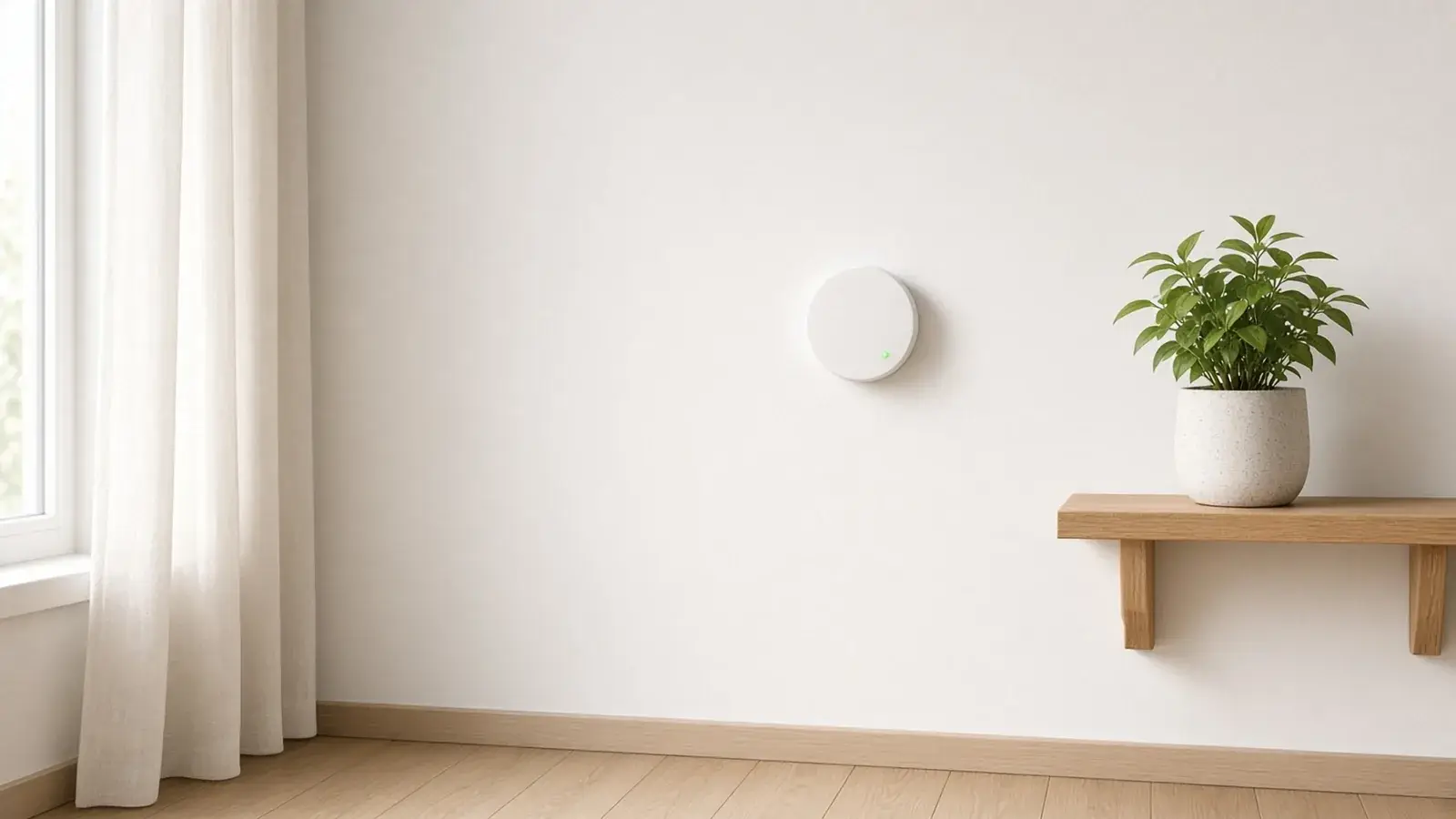
A CO alarm belongs in every room with a fuel-burning appliance (gas boiler, wood burner, gas water heater) and in bedrooms. In the room with the appliance, the Ei208 manual says to fit it on the ceiling, at least 30 cm from the wall and 1 to 3 m horizontally from the appliance. In bedrooms and living rooms it goes at breathing height. Look for the standard EN 50291. A CO alarm does not replace a smoke alarm. If it goes off: open the windows, switch off the appliance, get out and call 112 if the cause is unclear.
Why a separate CO alarm?
Smoke alarms react to smoke. Carbon monoxide forms when fuel does not burn completely, and it is invisible and has no smell. A smoke alarm will not detect it. Typical sources are:
- a faulty gas boiler or gas water heater,
- a blocked flue or chimney,
- a wood burner without enough air supply,
- a charcoal barbecue or patio heater used indoors,
- a wood pellet store.
According to DEKRA, 382 people died of CO poisoning in Germany in 2024, and 1,834 were treated in hospital.
Choosing the right alarm
- EN 50291 on the box or device.
- A sealed long-life battery, so you never forget to change it.
- A replace-by date on the device.
There is also a guide to choosing, fitting and maintaining CO alarms: EN 50292.
Where to fit it
The distances below come from the Ei208 manual. Other models may differ. Always read the manual for your alarm.
In the room with the appliance
- On the ceiling, at least 30 cm from the wall.
- 1 to 3 m horizontally from the appliance.
- Not directly above the appliance.
In bedrooms and living rooms
- At breathing height, for example next to the bed. The German campaign CO macht K.O. suggests a height of 1 to 1.5 m.
Not suitable
- directly above a cooker or sink,
- next to doors, windows or the cooker hood,
- inside cupboards.
What to do when it goes off
- Open windows and doors.
- Switch off the appliance if it is safe to do so.
- Leave the home.
- Call 112 if the cause is unclear or anyone has a headache, dizziness or nausea.
- Only use the appliance again once an engineer has checked it.
For what a chirping smoke alarm means, see Smoke alarm chirping.
Sources
- DEKRA: Carbon monoxide, the silent killer (German, 2 Sep 2026)
- DIN Media: DIN EN 50292:2024-07
- CO macht K.O.: Protection against carbon monoxide (German)
- GOV.UK: Smoke and Carbon Monoxide Alarm (England) Regulations 2015: Q&A booklet
- Ei Electronics: Ei208 user manual
Products that actually help
CO alarm to EN 50291 with sealed 10-year battery
The battery lasts the life of the alarm, so you never need to change it.
Link coming soon (TODO: Amazon UK/US Associates ID)Smoke alarm with sealed 10-year battery
A CO alarm does not detect smoke. Bedrooms, children's rooms and hallways also need smoke alarms.
Link coming soon (TODO: Amazon UK/US Associates ID)Stop it happening again
- Have your boiler and wood burner serviced and checked regularly.
- Never block or tape over the air vents and flues of fuel-burning appliances.
- Only use charcoal barbecues, gas barbecues and patio heaters outdoors, never in a home, tent or garage.
- Test the alarm with the test button every 4 weeks, as DEKRA advises.
- Note the replacement date on the alarm and replace it in time.
FAQ
Is a CO alarm a legal requirement?
In Germany there is no general requirement for private homes, unlike smoke alarms. In England, private landlords must fit a CO alarm in every room with a fixed fuel-burning appliance (gas cookers excepted) since 1 October 2022. Wherever something burns fuel, an alarm makes sense.
Can a combined alarm detect smoke and CO?
Some devices measure both. Check the manufacturer's details: the smoke part should be approved to EN 14604 and the CO part to EN 50291.
Where should a CO alarm not go?
According to the Ei208 manual: not directly above a cooker or sink, not next to doors, windows or the cooker hood, and not in a cupboard. Keep it at least 1 m from cooking appliances.
What should I do if the alarm goes off?
Stay calm, open windows and doors, switch off the appliance and leave the home. If the cause is unclear or anyone feels unwell, call 112. Have the appliance checked by an engineer before you use it again.
How long does a CO alarm last?
It is printed on the device. The Ei208 has a replace-by date on it. Replace the alarm by that date at the latest.
Related problems
Personal alarms on the go: benefits and limits
What a personal sound alarm can and cannot do, with practical advice on access, controls, hearing safety and choosing one for an older child.
Fire Extinguisher for Your Home: Which Type for the Kitchen, Hallway and Garage?
Foam, powder or a class F extinguisher for fat fires? How to choose the right fire extinguisher for your home, check for EN 3 and keep it serviced.
Smoke Alarm Chirping: What the Signal Means and When to Replace It
A short chirp every few seconds or minutes? How to tell whether the battery is low, the alarm is faulty or it needs replacing after 10 years.