
How to Clean a Grill Grate: Spotless Without the Wire-Brush Risk
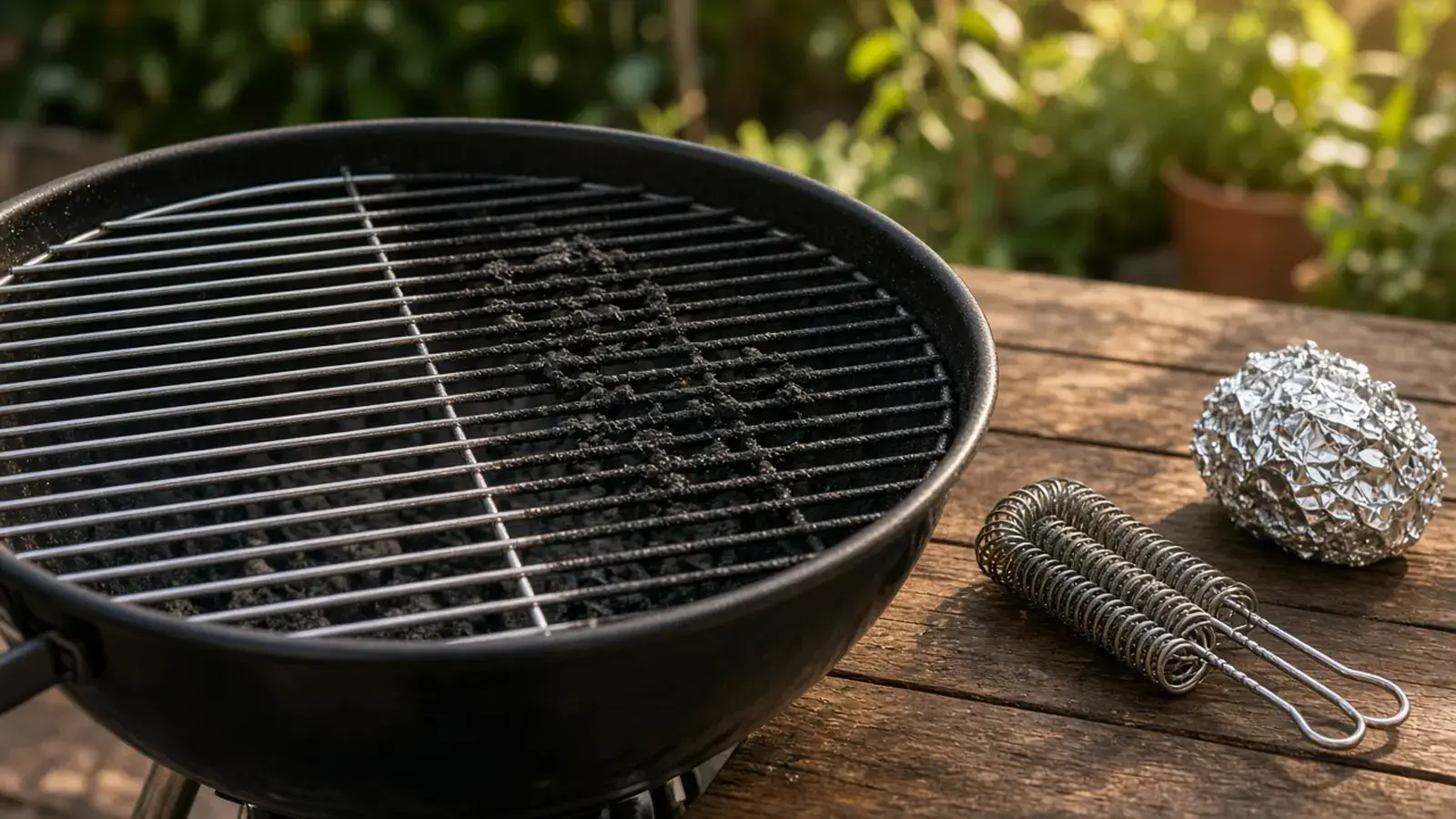
The easiest way: after grilling, or before the next cookout, burn the grate off on full heat for 10–15 minutes, then scrape off the charred residue while it is still hot using a bristle-free grill brush or a scrunched-up ball of foil. For a deep clean, soak the cooled grate (except cast iron) overnight in warm water with washing-up liquid or bicarbonate of soda, then scrub.
Why does food burn onto the grate so badly?
When you grill, fat, protein and sugar drip onto the hot grate. Protein bonds to the metal instantly, sugar from marinades caramelises and chars, and fat polymerises into a hard, lacquer-like layer. Leave it and the crust gets thicker with every barbecue and harder to remove.
The right method depends on the material:
- Stainless steel is tough and handles soaking, the dishwasher and hard scrubbing.
- Enamelled steel / porcelain enamel is smooth and easy-care, but chips will rust, so no metal scrapers.
- Cast iron holds heat well but rusts quickly and needs a layer of oil.
- Chrome-plated (budget grills) is delicate, and the plating can flake.
Method 1: Burn off and brush (after every cookout)
- Close the lid and run the grill on full heat for 10–15 minutes. On a charcoal grill, use the remaining embers.
- Fat and food residue char to dry ash.
- Scrape with a bristle-free grill brush or wooden scraper while the grate is still hot (gloves!).
- Wipe a lightly oiled paper towel over the grate with tongs to pick up the ash.
Method 2: A foil ball as scourer
No tools to hand? Scrunch a sheet of foil into a ball, grip it with tongs and rub it over the hot grate. Works well on stainless steel and cast iron. Be careful on enamel and chrome, as it can leave fine scratches.
Method 3: Soaking for a deep clean
For thick, old crust on stainless or enamel grates:
- Let the grate cool and scrape off loose residue.
- Place it in a tub, a large bin bag or the bath (with a protective liner).
- Cover with hot water and washing-up liquid; for stubborn grease add a few tablespoons of bicarbonate of soda.
- Soak for several hours or overnight.
- Scrub with a brush or scouring pad, rinse and dry well.
Alternatively, use a dedicated grill grate cleaner: spray on the cold grate, leave for the time on the label, wipe off and rinse thoroughly.
Cast iron: clean and season
Cast iron is the exception: no long soaks, no dishwasher, no harsh detergents. Burn off, scrape dry, rinse briefly with hot water, dry immediately and rub in a very thin layer of high-smoke-point oil (e.g. rapeseed oil) or cast iron spray. If surface rust has formed, rub it off with steel wool, oil again and season on high heat for 30–45 minutes.
Methods compared
| Method | Effect | Effort | Suitable for |
|---|---|---|---|
| Burn-off + bristle-free brush | good for fresh residue | very low | all grates |
| Foil ball | good | low | stainless, cast iron |
| Soak with detergent/bicarb | very good for old crust | waiting time | stainless, enamel |
| Grill cleaner spray | very good | low | per label, usually stainless/enamel |
Common mistakes
- Using a worn wire brush. Loose bristles are a real health hazard.
- Oven cleaner on the grate. It is very caustic, attacks aluminium and coatings, and must be rinsed off extremely thoroughly. Dedicated grill cleaners are the better choice.
- Leaving cast iron wet. Rust forms overnight.
- Cold water on a hot grate. The thermal shock can crack enamel and warp cast iron.
Products that actually help
Bristle-free grill brush
Coils instead of loose wire bristles, so nothing can break off and end up in your food. Works best on a warm grate.
Link coming soon (TODO: Amazon UK/US Associates ID)Grill grate cleaner spray
For a thorough clean on a cooled grate: spray, leave to work, wipe off and rinse with clean water.
Link coming soon (TODO: Amazon UK/US Associates ID)Cast iron protection spray or seasoning oil
For cast iron grates only: apply thinly after cleaning. The film prevents rust and maintains the seasoning.
Link coming soon (TODO: Amazon UK/US Associates ID)Stop it happening again
- Preheat the grate and give it a quick brush before cooking. Less sticks to a hot, clean grate.
- Oil the food lightly rather than the grate, which prevents sticking without fat dripping into the fire.
- Add sugary marinades and BBQ sauces at the end, because sugar caramelises and burns on fast.
- Burn off and brush briefly after every cookout, so a deep clean is rarely needed.
- Dry cast iron thoroughly and oil it thinly after cleaning.
- Use a grill cover to keep rain off, which prevents rust and mould on fat residue.
FAQ
Can I put the grill grate in the dishwasher?
Stainless steel grates usually cope if they fit. Scrape off coarse crust first, or it will clog the filter. Enamel grates only if the manufacturer allows it; cast iron and chrome-plated grates don't belong in the dishwasher, as they rust or the coating suffers.
Do coffee grounds or newspaper help?
Wet newspaper wrapped around the grate overnight softens crust, much like soaking in water, but not better. Coffee grounds act as a mild scourer, but it's mostly a home-remedy myth with modest effect.
How do I clean a cast iron grate?
Burn off on high heat, scrape with a wooden scraper or bristle-free brush, rinse briefly with hot water, dry immediately (ideally on the warm grill) and rub in a thin layer of high-smoke-point oil. No dishwasher, no long soaks.
Isn't a bit of crust good for flavour?
No. Old charred fat tastes bitter, can go rancid and makes fresh food stick more. Seasoning only exists on cast iron, and it's a thin, smooth layer of oil, not crust.
Related problems
Brown Patches in the Lawn: Find the Cause and Fix It Properly
Drought, dog urine, grubs or fungus? These quick tests reveal what causes brown patches in your lawn and how to repair them at the right time of year.
Weak Car Battery in Winter: Test, Charge and Jump-Start
Car struggling to start in the cold? How to test the battery, charge it properly and jump-start in the correct order.
Frozen Windscreen: Clear It Fast Without Scratches
Ice scraper, de-icer spray or a cover? How to clear your windscreen quickly in the morning without scratches, cracks or trouble with the police.