
Brown Patches in the Lawn: Find the Cause and Fix It Properly
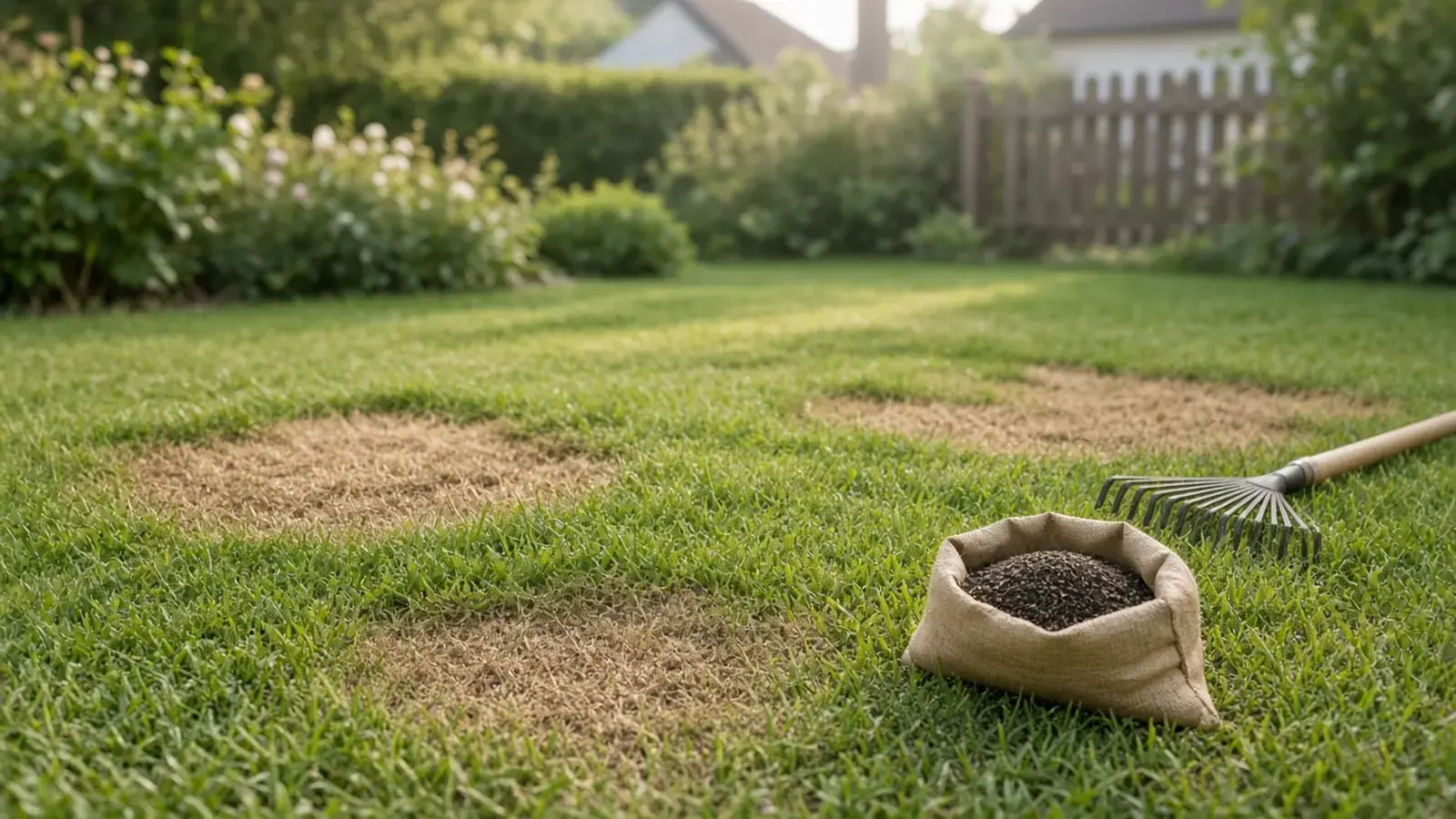
Check the cause first, then repair: do a tug test (if the turf lifts like a carpet, grubs are usually eating the roots), a screwdriver test (if it's hard to push into the soil, it's drought) and look at the shape (round patches with a dark green ring point to dog urine). Then rough up the dead areas, overseed with lawn repair seed and keep it moist for 3–4 weeks. Best time: April to May or late August to late September.
Cause first, then repair
Brown patches all look alike but have very different causes. If you just overseed without knowing why, the patches will be back next year. These three tests take five minutes in total:
- Tug test: Pull hard on the grass where brown meets green. If the turf lifts like a loose carpet, the roots are gone, which is typical of grubs.
- Screwdriver test: Push a long screwdriver into the soil. If it barely goes in, the soil is dried out or heavily compacted.
- Shape check: Round patches with a dark green edge? Stripes or patterns? Growing circles with a coating? The shape tells you a lot.
The most common causes at a glance
| Sign | Likely cause | What helps |
|---|---|---|
| large straw-coloured areas, hard soil | drought | water deeply, grass often recovers |
| round patches with a lush green ring | dog urine | water at once, overseed |
| turf lifts off, birds pecking | grubs | nematodes, then overseed |
| stripes or patterns after feeding | fertiliser scorch | water heavily, spread evenly |
| thick, spongy thatch, moss | thatch / compaction | scarify, aerate |
| round patches with a reddish or white coating | fungus (e.g. red thread, snow mould) | potassium feed, aeration, clear leaves |
Case 1: Drought
In hot summers lawns often turn brown over large areas, especially on south-facing sides, sandy soil and above pipes or stones. The good news: the grass is usually just dormant. Water rarely and heavily (10–15 l/m² per session) rather than a little every day, so the roots grow deep. To see how much has landed, put an empty tuna tin in the sprinkler’s range: about 1–1.5 cm of water equals 10–15 l/m².
Case 2: Dog urine
Urine contains a lot of nitrogen and salts. At the edge it acts like fertiliser (dark green), in the centre it burns the grass. Water fresh spots immediately with a watering can. Rake out and overseed patches that are already dead.
Case 3: Grubs
Grubs are the larvae of chafer beetles and similar species, and they eat grass roots in late summer and spring. In home gardens the go-to is nematodes (Heterorhabditis), available from garden centres. They only work at soil temperatures above about 12 °C, so in late summer or late spring. Keep the soil moist before and after. Then overseed the damaged areas.
Case 4: Thatch, compaction, fungus
Dead stems and moss form a thatch layer that blocks water and air. Scarifying in spring (when the lawn is growing strongly, usually April–May) or late summer fixes it. Fungal diseases often appear with nutrient deficiency, waterlogging and leaves left lying. Potassium-rich autumn feed, clearing leaves and good aeration help prevent them.
How to repair bare patches (overseeding)
- Rake out dead grass firmly.
- Loosen the soil 2–3 cm deep and work in some lawn soil if needed.
- Spread repair seed evenly (quantity per pack) and rake in lightly.
- Firm down, e.g. with a board or by treading.
- Keep it constantly moist for 3–4 weeks, which means a fine daily watering in dry weather. Drying out is the most common reason for failure.
- Only mow once the new grass is about 8–10 cm tall.
Timing: Grass seed needs soil temperatures of around 10–20 °C. April–May and late August–September are ideal. In November overseeding is no longer worth it, so clear the leaves and repair in spring.
Common mistakes
- Watering briefly every day. It encourages shallow roots and moss.
- Mowing too short. Below 4 cm, lawns scorch faster in summer.
- Feeding in a heatwave. Without watering afterwards, the grass burns.
- Letting new seed dry out. A single dry day can kill the seedlings.
Products that actually help
Lawn patch repair seed with fertiliser
A seed and fertiliser mix made for bare patches. It germinates quickly and brings starter nutrients with it.
Link coming soon (TODO: Amazon UK/US Associates ID)Electric lawn scarifier with collection box
Removes thatch and moss so water, air and new seed can reach the soil. Suitable for small to medium gardens.
Link coming soon (TODO: Amazon UK/US Associates ID)Oscillating lawn sprinkler
Waters rectangular areas evenly, which matters during germination and in dry spells.
Link coming soon (TODO: Amazon UK/US Associates ID)Autumn lawn feed high in potassium
Potassium-rich feed for September and October. It strengthens the grass against frost, drought stress and fungal disease.
Link coming soon (TODO: Amazon UK/US Associates ID)Stop it happening again
- Water rarely but deeply: once or twice a week, about 10–15 litres per m², ideally early in the morning.
- Don't mow too short: 4–5 cm, around 5 cm in high summer. Never remove more than a third of the blade at once.
- Spread fertiliser evenly (spreader, no overlaps) and water afterwards, or the grass will scorch.
- Dilute dog urine spots straight away with plenty of water.
- Scarify in spring if there's thatch, but only when the lawn is dry and growing well.
- Clear leaves in autumn so the grass underneath doesn't rot or yellow.
FAQ
Will a dried-out lawn turn green again?
Usually, yes. Grass goes dormant in drought and regrows from the roots after rain or watering. But if a brown tuft pulls out very easily and stays brown two to three weeks after proper watering, the grass is dead and you should overseed.
Can I still overseed in autumn?
Grass seed germinates reliably at soil temperatures of about 10–20 °C. That's usually until late September, in mild areas until early October. From November it's too late, so repair the patches in April or May instead.
How do I recognise grubs?
Do the tug test: if the brown turf lifts like a carpet because there are hardly any roots, and you find C-shaped, whitish larvae with a brown head, they are grubs (chafer larvae). Birds, hedgehogs or badgers digging in the lawn are another sign.
What helps against dog urine spots?
Dilute the spot immediately with lots of water. Rake out dead patches, work in some fresh soil and overseed. Long term, give your dog a dedicated corner with mulch or gravel.
Related problems
How to Clean a Grill Grate: Spotless Without the Wire-Brush Risk
Burnt-on crust on your BBQ grate? How to clean stainless, enamel and cast iron grates properly: burn-off, soaking, foil – and what to avoid.
Weak Car Battery in Winter: Test, Charge and Jump-Start
Car struggling to start in the cold? How to test the battery, charge it properly and jump-start in the correct order.
Frozen Windscreen: Clear It Fast Without Scratches
Ice scraper, de-icer spray or a cover? How to clear your windscreen quickly in the morning without scratches, cracks or trouble with the police.